3-Month Fitness Progress Tracker
Realistic 3-Month Goals
Based on expert guidelines from the article. Your progress will vary based on consistency, nutrition, and individual factors.
Your Progress Tracker
Your Progress Report
Your Expected Progress
Three months. That’s 12 weeks. 84 days. It’s not a lifetime-but it’s long enough to change everything if you know what you’re doing. Can you get really fit in that time? The answer isn’t yes or no. It’s yes, but only if you stop chasing quick fixes and start building habits that stick.
What Does ‘Really Fit’ Even Mean?
People say they want to get fit. But what does that look like? For some, it’s losing 15 pounds of fat. For others, it’s doing their first pull-up or running a 5K without stopping. Maybe it’s finally seeing your abs in the mirror. The problem? Most people don’t define it. And without a clear target, you’re just spinning your wheels.Real fitness isn’t just about looking different. It’s about feeling stronger, moving better, and having more energy every day. In three months, you can absolutely make big progress in all of those areas-if you focus on the right things.
What You Can Actually Change in 90 Days
Let’s cut through the hype. You won’t turn into a bodybuilder or marathon runner in three months. But you can do these things:- Loose 8-15 pounds of body fat (if you’re starting with extra weight)
- Gain 3-8 pounds of lean muscle (if you’re new to lifting)
- Drop 2-4 inches off your waist
- Run a full 5K without stopping
- Do 10+ consecutive push-ups
- Hold a 60-second plank
- Feel more confident, less tired, and sleep better
These aren’t magic. They’re measurable. And they happen when you combine smart training with real nutrition-not fad diets or 2-hour gym sessions five days a week.
The Three Pillars of a Real 3-Month Transformation
There’s no secret formula. Just three things that work every time:1. Strength Training (3-4 Days a Week)
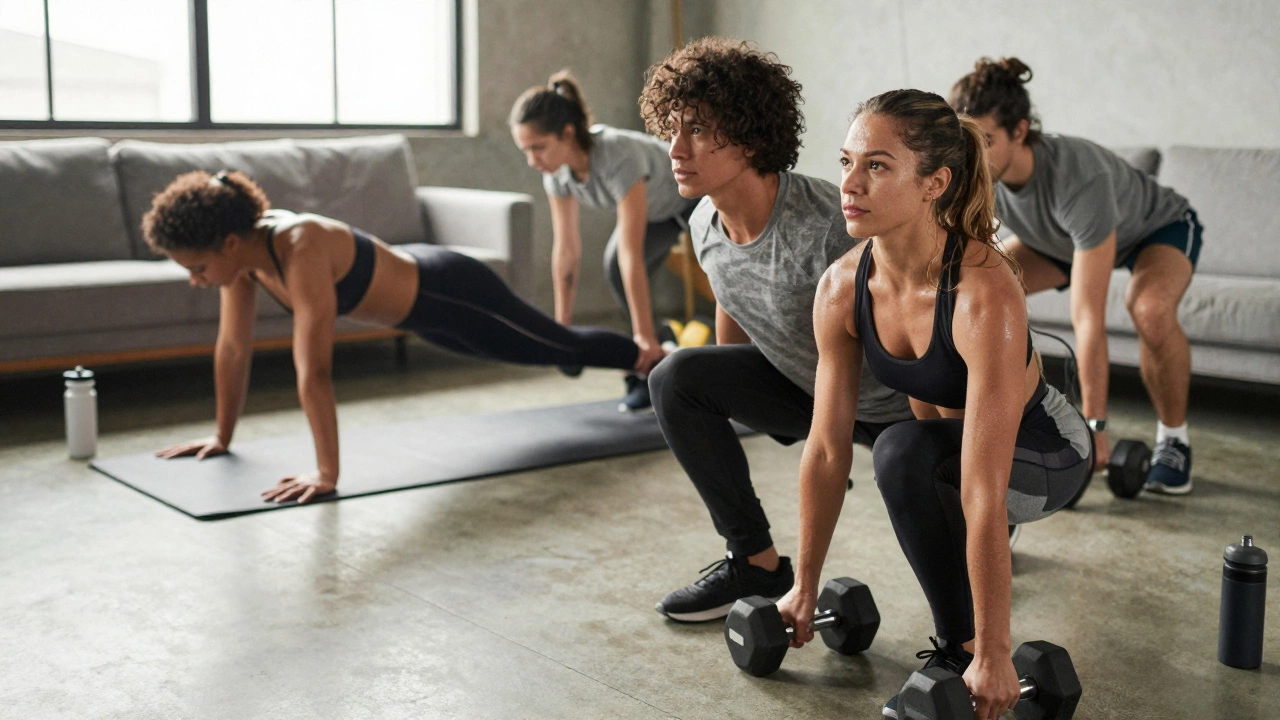
Cardio burns calories. Strength builds your body. If you’re only doing running or cycling, you’re missing half the picture. Your muscles are your metabolism’s best friend. The more muscle you have, the more fat you burn-even when you’re sitting on the couch.Start with compound lifts: squats, push-ups, rows, deadlifts, overhead presses. These move multiple joints and muscles at once. That means you get more bang for your buck. You don’t need fancy machines. A pair of dumbbells, a bench, and a pull-up bar are enough. If you’re at home, bodyweight squats, lunges, and inverted rows under a table work too.
Progression is key. Each week, try to add one more rep, one more set, or a little more weight. Even 5 extra pounds on your squat over 12 weeks adds up to 60 pounds of progress. That’s not luck. That’s consistency.
2. Eat Like You Mean It (No Dieting)
You can’t out-train a bad diet. But you also don’t need to count every calorie or give up pizza forever. The trick? Focus on food quality first.Here’s what works for most people:
- Fill half your plate with vegetables or fruit at every meal
- Choose lean protein-chicken, fish, eggs, tofu, legumes-at every meal
- Swap sugary drinks for water, tea, or black coffee
- Limit processed snacks: chips, cookies, candy, granola bars
- Eat slowly. Stop when you’re 80% full
That’s it. No need to eliminate carbs or fats. Your body needs them. But if you’re eating mostly whole foods, your body naturally starts to rebalance. You’ll crave less sugar. You’ll feel fuller longer. And you’ll lose fat without feeling hungry all the time.
3. Move More Outside the Gym
You think your workout is the only thing that matters? Think again. The rest of your day matters just as much.People who sit 10 hours a day-even if they work out-still have higher risks for heart disease, diabetes, and back pain. You don’t need to run a marathon. Just move more.
- Take a 10-minute walk after lunch
- Stand up every hour and stretch
- Walk to the store instead of driving
- Take the stairs
- Do 5 minutes of stretching before bed
These small habits add up. Over three months, you’ll burn hundreds of extra calories. More importantly, you’ll feel less stiff, less tired, and more alive.
What Doesn’t Work (And Why People Fail)
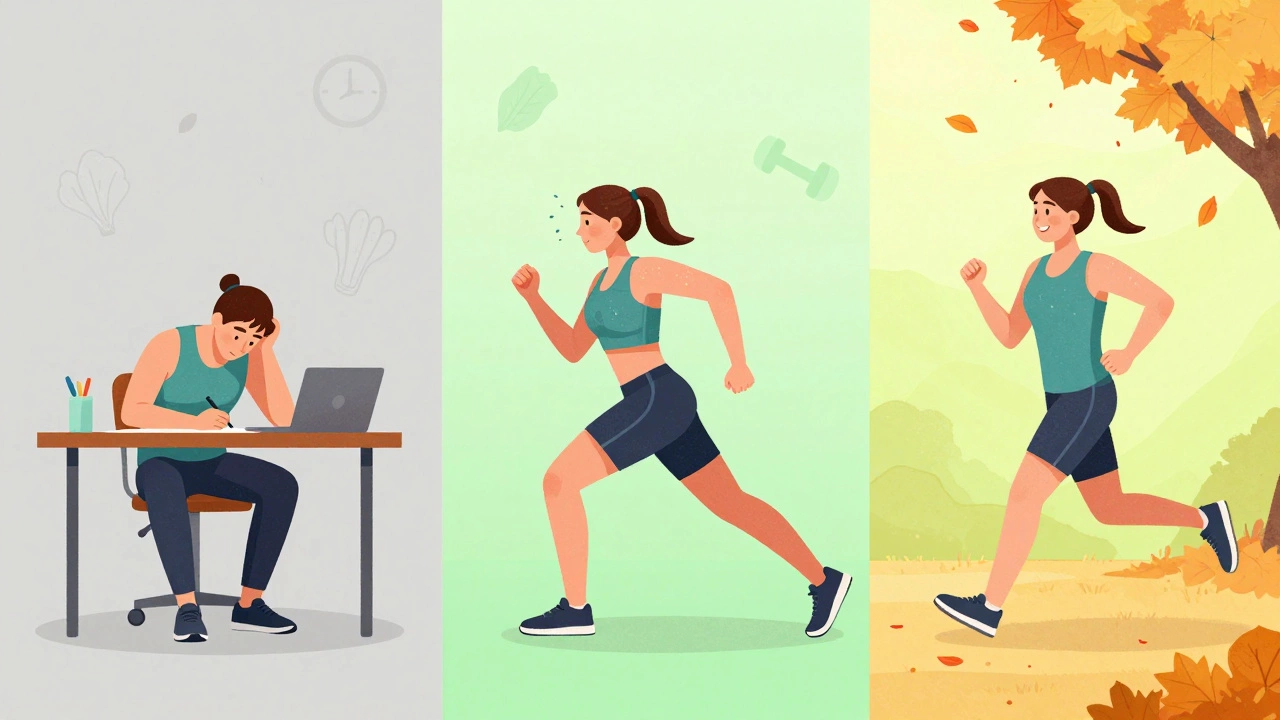
Most people quit because they do the wrong things. Here’s what you should avoid:- Extreme calorie cutting-You’ll lose muscle, not just fat. Your metabolism slows. You’ll bounce back harder.
- Doing only cardio-You’ll get skinny-fat. Lean, but soft. No tone, no strength.
- Following Instagram influencers-Their six-pack came from years of training, not a 90-day challenge.
- Buying supplements-Protein powder helps if you’re not eating enough protein. Everything else? Waste of money.
- Working out 2 hours a day-You’ll burn out. Recovery is part of the process.
Real progress isn’t flashy. It’s quiet. It’s showing up even when you’re tired. It’s choosing an apple over a candy bar. It’s sleeping seven hours instead of scrolling until midnight.
A Real 3-Month Plan (No Fluff)
Here’s what a simple, effective plan looks like:- Monday: Full-body strength (squats, push-ups, rows, planks)
- Tuesday: Walk 45 minutes or do light cardio
- Wednesday: Upper body strength (dumbbell press, pull-ups, bicep curls)
- Thursday: Rest or stretch
- Friday: Lower body strength (deadlifts, lunges, calf raises)
- Saturday: Walk, hike, or play a sport
- Sunday: Rest
Each workout lasts 45-60 minutes. No more. No less. Focus on form. Track your progress in a notebook or phone app. Write down how much weight you lifted, how many reps you did, how you felt.
For nutrition: Eat protein at every meal. Add vegetables to every plate. Drink water before meals. Skip sugary drinks. That’s 90% of the battle.
What to Expect Week by Week
Weeks 1-2: You’ll feel sore. You’ll be tired. You might even doubt yourself. That’s normal. Your body is adjusting. Weeks 3-6: You’ll start noticing changes. Clothes fit looser. You have more energy. You’re sleeping better. Your strength is climbing. This is where most people quit-because the results aren’t dramatic yet. Weeks 7-12: The magic happens. You’re stronger. You look different. People notice. You feel proud. You don’t need a mirror to know you’ve changed.The biggest transformation isn’t physical. It’s mental. You learn you can stick to something hard. That changes everything.
Real People, Real Results
In Melbourne, I’ve seen it happen. A 42-year-old teacher lost 12 pounds and gained enough strength to carry her toddler up the stairs without gasping. A 35-year-old office worker went from barely finishing a 10-minute walk to running a 5K. A 28-year-old student dropped 18 pounds and stopped needing his afternoon coffee just to stay awake.They didn’t do anything crazy. They just showed up. Every day. Even when they didn’t feel like it.
What Happens After 3 Months?
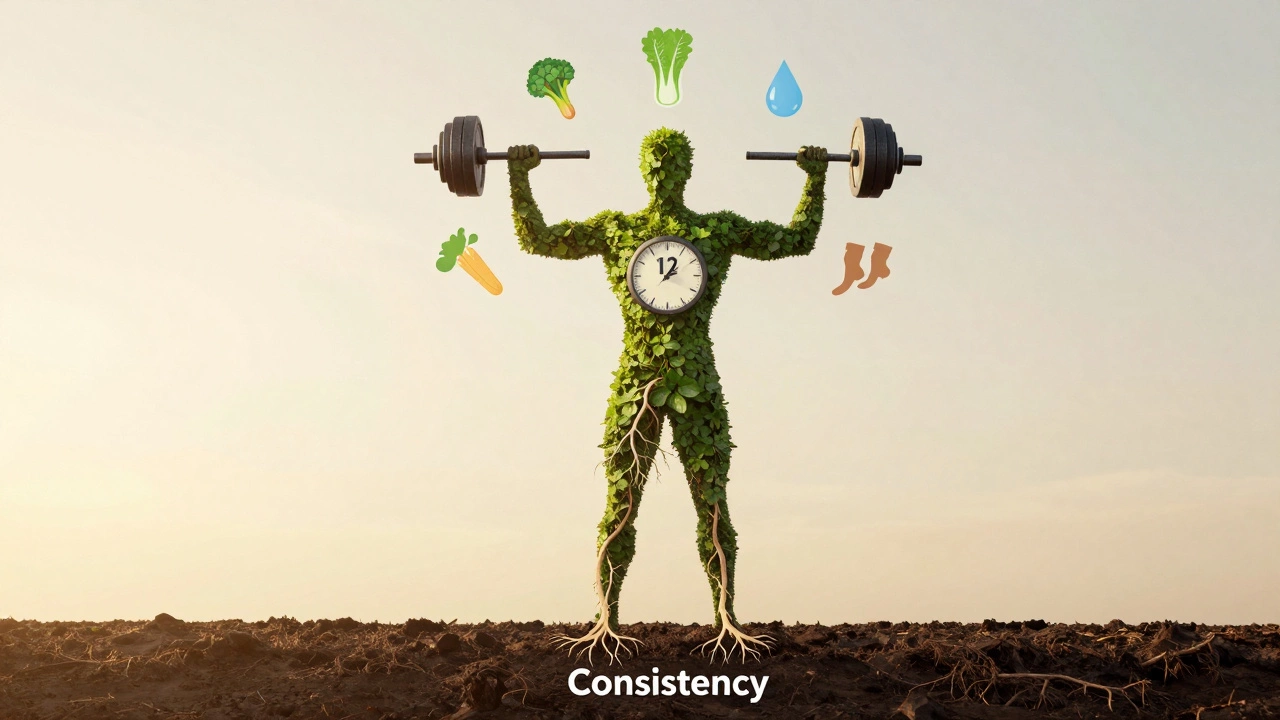
This isn’t a finish line. It’s a starting line. Once you’ve built the habit of moving and eating well, you don’t have to stop. You can keep going. You can get stronger. Faster. Leaner. Healthier.The goal isn’t to be ‘fit’ in three months. The goal is to be someone who stays fit-for life.
Can I get ripped in 3 months?
You can get noticeably leaner and more toned in three months, especially if you’re starting from a higher body fat percentage. But ‘ripped’-meaning visible six-pack abs with very low body fat-is rare without years of consistent training and strict nutrition. For most people, three months brings strong progress, not a bodybuilding cover. Focus on getting stronger and healthier, not just looking a certain way.
Do I need a gym to get fit in 3 months?
No. You can build strength and lose fat with bodyweight exercises at home. Push-ups, squats, lunges, planks, and resistance bands are all you need. A gym gives you more equipment options, but it doesn’t make you fit faster. What matters is consistency, not the equipment you use.
What if I miss a workout?
Missing one workout doesn’t ruin your progress. Missing five in a row might. The key is not perfection-it’s return. If you skip a day, just get back on track the next day. Don’t try to ‘make up’ for it with an extra-long session. That leads to burnout. Progress is built over weeks and months, not single days.
Will I lose weight or just tone up?
You’ll likely do both. If you’re eating fewer calories than you burn, you’ll lose fat. If you’re lifting weights, you’ll build muscle. Muscle is denser than fat, so you might not see the scale drop much-but your clothes will fit better, and your body will look leaner. Focus on how you feel and look, not just the number on the scale.
Is it possible to get fit if I’m over 40?
Absolutely. People over 40 often make the best progress because they’re more consistent and less likely to overtrain. Strength training becomes even more important as you age-it helps protect your joints, bones, and metabolism. Start slow, focus on form, and be patient. Results come slower than in your 20s, but they’re just as real.