Strength Progression Calculator
Exercise Selection
Progression Plan
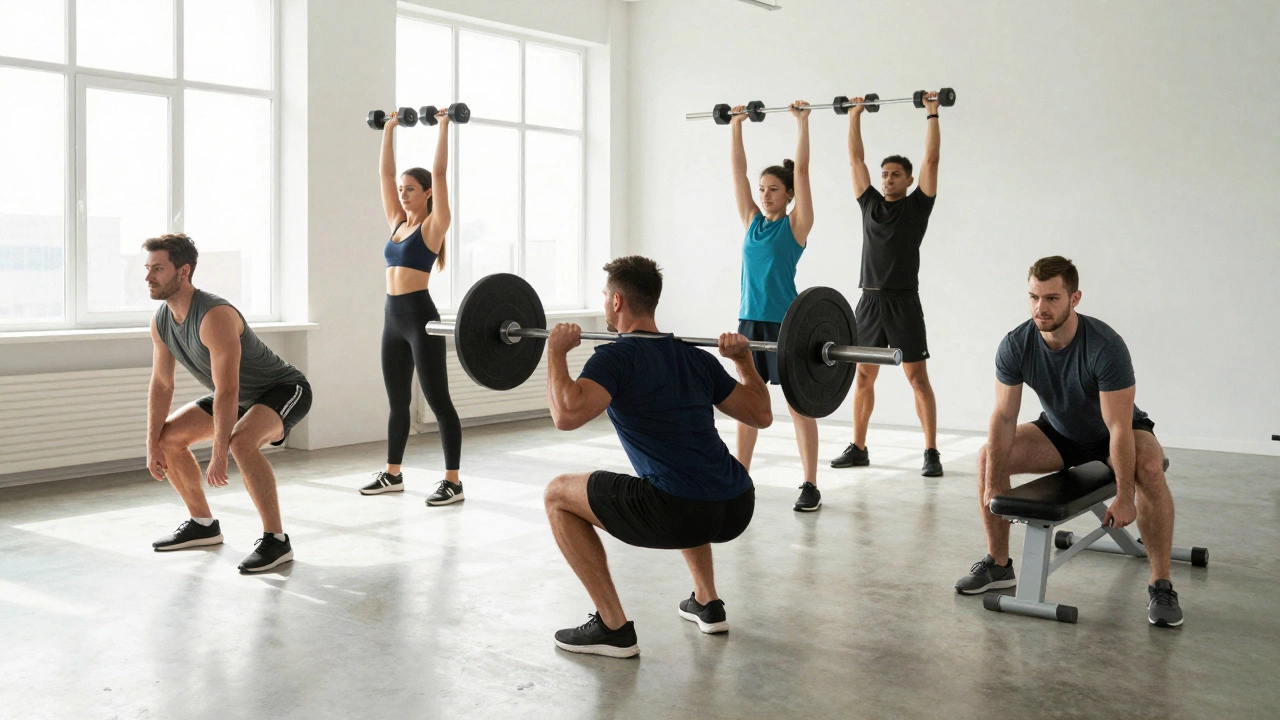
Most people walk into a gym and feel overwhelmed. Machines everywhere, dumbbells of all sizes, strangers lifting weights like they’re training for the Olympics. But here’s the truth: you don’t need 50 exercises to get strong, lean, and fit. In fact, six foundational movements cover 90% of what your body needs to build real strength and function. These aren’t fancy or trendy. They’re the backbone of every serious fitness program - from Olympic lifters to retirees rebuilding mobility.
1. The Squat
The squat is the king of lower-body exercises. It’s not just about leg day. Squatting teaches your hips, knees, and ankles to work together. It strengthens your core, improves posture, and even helps with everyday tasks like picking up groceries or climbing stairs.
There are many versions - bodyweight, goblet, barbell back squat - but the goal is the same: lower your hips below your knees while keeping your chest up and heels grounded. Start with just your bodyweight. Master the pattern before adding weight. A common mistake? Letting your knees cave inward. That’s a red flag. Your knees should track over your toes, not collapse inward. Once you can do 3 sets of 12 bodyweight squats with control, try a light barbell. The progression is simple: more weight, better form, deeper range.
2. The Deadlift
If the squat builds strength from the bottom up, the deadlift builds it from the ground up. This movement trains your entire posterior chain - glutes, hamstrings, lower back, and traps. It’s also one of the best ways to build grip strength and core stability.
Forget the myth that deadlifts are dangerous. When done right, they’re one of the safest lifts. The key is keeping your back flat, hips hinged, and bar close to your shins. Don’t pull with your arms - your legs and glutes do the work. Start with a light barbell or even a pair of dumbbells. Focus on the hinge motion: push your butt back, not down. If you feel it in your lower back instead of your hips, you’re rounding your spine. That’s a signal to stop and reset. A good benchmark? Being able to deadlift your bodyweight with perfect form. That’s not about being strong - it’s about being functional.
3. The Bench Press
Yes, the bench press gets a bad rap. People think it’s only for chest day or bodybuilders. But it’s a full-body movement. Your feet, glutes, and lats all stabilize the lift. It’s also one of the best ways to build pushing strength - useful for pushing a car, lifting furniture, or even breaking a fall.
Don’t arch your back like you’re trying to touch your toes. Don’t bounce the bar off your chest. Keep your shoulder blades squeezed back, feet planted, and the bar in a straight line. Lower it slowly to your mid-chest, then press up without locking your elbows. Start with dumbbells if you’re new - they let your arms move independently and reduce joint stress. Progress by adding 2.5kg every week. Most people plateau because they skip the basics. You don’t need to bench 100kg to benefit. Just be able to lift your bodyweight with control.
4. The Overhead Press
Most people think shoulder presses are for aesthetics. But overhead strength matters for real life. Carrying groceries overhead, reaching for a shelf, or even throwing a ball - all rely on this movement. It also forces your core to stay tight and your spine to stay neutral.
Stand with feet shoulder-width apart. Hold dumbbells or a barbell at shoulder height, palms forward. Press straight up without leaning back. Don’t lock your elbows at the top - keep a slight bend. Lower slowly. A common mistake? Arching the lower back to get the weight up. That’s cheating. Your core should stay engaged the whole time. If you can’t press your bodyweight overhead with good form, you’re missing a key piece of upper-body strength. Start with light dumbbells. Focus on control, not weight.
5. The Pull-Up
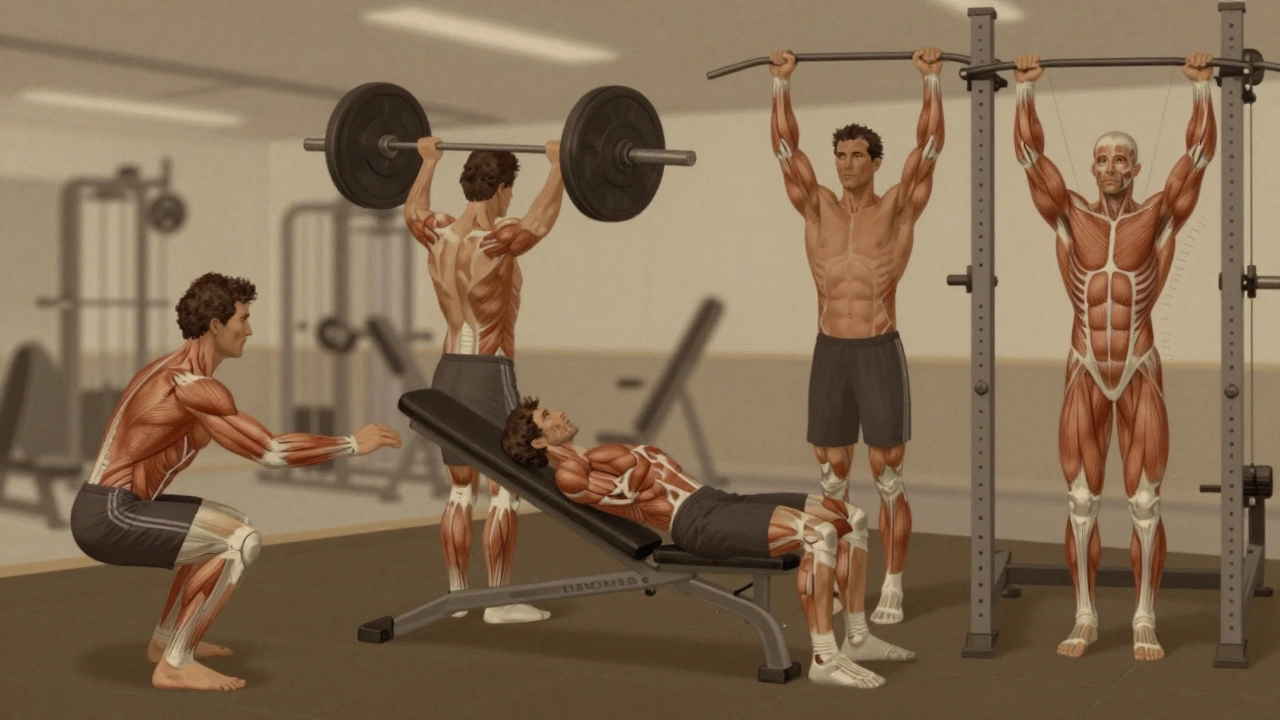
This is the gold standard for upper-body pulling strength. No machine. No cables. Just your body and gravity. Pull-ups build your lats, biceps, forearms, and core. They’re also one of the best tests of overall strength.
But not everyone can do one. That’s fine. Start with assisted pull-ups using a resistance band or machine. Or do inverted rows under a bar - pull your chest to the bar while your feet stay on the ground. The goal is to build the muscle memory. Don’t swing. Don’t jerk. Pull your shoulder blades down and back first, then lift your chin over the bar. Once you can do 3 sets of 5, you’re ahead of 80% of gym-goers. If you can do 10, you’re in the top 10%. Progress is slow. But it’s real.
6. The Row
Every time you pull something toward you - a suitcase, a door, a child - you’re doing a row. That’s why this movement is non-negotiable. It balances out the pushing exercises like the bench press and overhead press. Without rows, your shoulders will round forward, your posture will collapse, and you’ll hurt your neck.
Use a barbell, dumbbells, or a cable machine. Keep your back flat, hinge at the hips, and pull the weight to your lower ribs. Squeeze your shoulder blades together at the top. Lower slowly. A great beginner variation is the dumbbell row: one hand on a bench, the other pulling a dumbbell up. Do 3 sets of 10 per side. If you’re not doing rows, you’re leaving half your upper body weak. And that’s asking for injury.
Why These Six? The Science Behind It
These six exercises cover the five fundamental human movement patterns: squat, hinge, push, pull, and carry (rows and deadlifts cover carry). Add the overhead press, and you’ve got full-body coverage. They’re not just popular because they’re old - they’re popular because they work.
A 2021 study from the Journal of Strength and Conditioning Research tracked 120 beginners over six months. Those who stuck to just these six exercises improved their strength by 47% on average. Those who jumped between 20+ machines saw only a 21% gain. Why? Focus. Simplicity. Progressive overload. You don’t need variety to get results. You need consistency.
How to Start
Don’t try to do all six in one day. Split them. Two days a week is enough. Here’s a simple plan:
- Day 1: Squat, Bench Press, Row
- Day 2: Deadlift, Overhead Press, Pull-Up
Do 3 sets of 8-12 reps for each. Rest 60-90 seconds between sets. Add 2.5kg to the bar every week. That’s it. No fancy routines. No supplements. Just lift, recover, repeat.
Common Mistakes to Avoid
- Skipping warm-ups - always do 5 minutes of dynamic movement (leg swings, arm circles, cat-cow)
- Chasing weight over form - if your form breaks, the weight is too heavy
- Ignoring rest - muscles grow when you rest, not when you lift
- Comparing yourself to others - everyone starts somewhere. Your progress is yours alone
What Comes Next?
Once you can do these six with solid form and steady progress, you’ve built a foundation most people never reach. From here, you can add variations - lunges, farmer’s carries, dips, or even Olympic lifts. But don’t rush. Master the basics first. Strength isn’t about how much you lift. It’s about how well you move.
Do I need equipment to do these exercises?
Not always. Bodyweight squats, push-ups (a variation of the bench press), and inverted rows (using a table or sturdy bar) can replace machines early on. Pull-ups need a bar, but resistance bands can help. Deadlifts and overhead presses need weights - dumbbells or a barbell - but even light ones work. You don’t need a full gym to start.
How long until I see results?
You’ll feel stronger in 2-3 weeks. Visible changes - better posture, firmer muscles - show up in 6-8 weeks. Real strength gains take 3-6 months. The key is consistency. Two days a week, every week, with small increases in weight or reps. No shortcuts.
Can women do these exercises too?
Absolutely. These six exercises are gender-neutral. Women benefit just as much as men - better bone density, stronger joints, improved metabolism, and reduced injury risk. Lifting weights doesn’t make you bulky. It makes you resilient.
What if I have back pain?
Talk to a physiotherapist first. But many people with mild back pain improve with controlled deadlifts and rows - because they strengthen the muscles that support the spine. Start light. Focus on form. Avoid rounding your back. If it hurts, stop. Progress slowly. Pain isn’t a sign you’re doing it right - it’s a sign to adjust.
Should I do cardio along with these?
Yes, but not on lifting days. Walk 30 minutes on off-days. Or do light cycling or swimming. Cardio supports recovery and heart health. But strength training is what changes your body shape, metabolism, and long-term health. Don’t skip it for cardio.