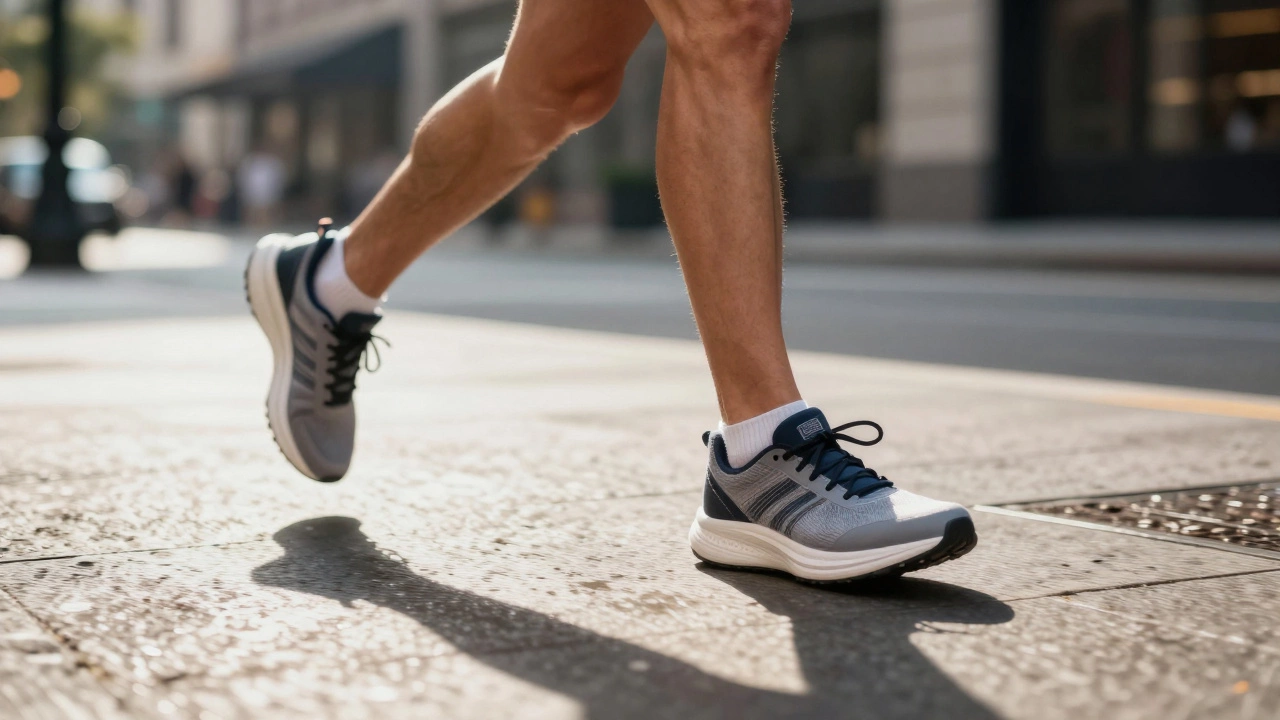
Ever wonder why your running shoes don’t work for basketball, or why your old tennis sneakers feel stiff after a few months? Sports footwear isn’t just any shoe you wear to the gym. It’s engineered for specific movements, impacts, and surfaces. Get it wrong, and you risk injury. Get it right, and you move better, feel stronger, and last longer.
What Exactly Is Sports Footwear?
Sports footwear is a type of athletic shoe designed for a specific sport or physical activity. Unlike casual shoes, which focus on comfort and style, sports footwear is built around biomechanics - how your body moves during exercise. Each pair has a unique mix of cushioning, support, grip, and flexibility tailored to the demands of the sport.
Take a pair of running shoes. They’re made to handle repeated heel-to-toe motion over hard surfaces. That means extra cushioning in the heel and a flexible forefoot to help you roll forward. Now look at a pair of basketball shoes. They’re built to stop, jump, and cut sideways fast. So they have high tops for ankle support, thick soles for shock absorption, and a flat, grippy base to prevent slipping on hardwood.
There’s no such thing as a one-size-fits-all sports shoe. Wearing the wrong type doesn’t just feel awkward - it can lead to shin splints, plantar fasciitis, or even ACL tears.
How Sports Footwear Differs From Regular Shoes
Regular shoes - like sneakers you wear to the mall or loafers you wear to work - are made for walking on flat ground, not for explosive movement. They lack the technical features sports footwear includes:
- Midsole foam: High-end running shoes use EVA, Pebax, or PU foam that rebounds energy with every step.
- Outsole tread patterns: Cleats for soccer, herringbone for tennis, and flat rubber for gym shoes - each grip is designed for the surface.
- Arch support: Some shoes have rigid arches for overpronators, others are neutral for natural foot motion.
- Weight distribution: Sprint spikes are light and low to the ground. Hiking boots are heavy and high for stability.
Even the stitching matters. Sports footwear uses bonded seams and reinforced uppers to hold up under stress. A casual sneaker might fall apart after a few months of gym use. A proper training shoe lasts 300-500 miles before it loses its shape.
Types of Sports Footwear and What They’re Made For
Not all sports shoes are created equal. Here’s how they break down by activity:
- Running shoes: Designed for forward motion. Lightweight, cushioned, with a slight heel-to-toe drop. Brands like Nike Air Zoom, Asics Gel-Kayano, and Hoka Bondi are built for long-distance impact.
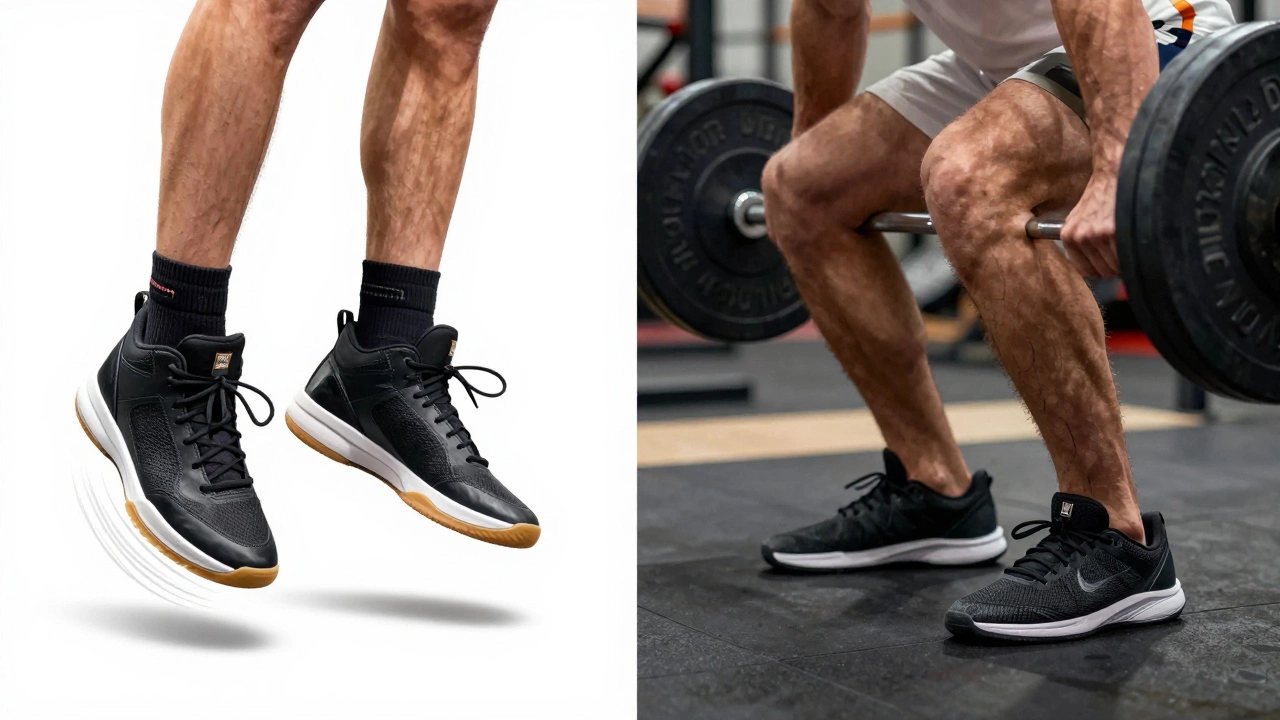
- Training shoes (cross-trainers): For gym workouts, HIIT, or circuit training. They balance cushioning and lateral support. Good for side-to-side moves, jumping, and lifting. Examples: Reebok Nano, Adidas Powerlift.
- Basketball shoes: High-top for ankle protection, thick rubber soles for grip, and responsive midsoles for jumping. Think Nike LeBron, Under Armour Curry.
- Tennis shoes: Durable outsoles with herringbone tread for quick stops and slides on clay or hard courts. Low profile for stability. Wilson Pro Staff, Babolat Jet.
- Soccer cleats: Studs (blades or conical) for traction on grass or turf. Lightweight uppers for ball control. Adidas Predator, Nike Mercurial.
- Trail running shoes: Aggressive lugs for mud, rock guards to protect toes, waterproof membranes. Salomon Speedcross, Merrell Moab.
- Walking shoes: Often confused with running shoes, but they’re more rigid in the midfoot to encourage natural heel strike. New Balance 928, Brooks Addiction.
Each of these has a clear purpose. Wearing tennis shoes for trail running? You’ll slip on wet roots. Wearing running shoes for weightlifting? You’ll wobble on lifts and lose power transfer.
Why Choosing the Right Pair Matters
It’s not just about performance - it’s about injury prevention. A 2023 study from the Australian Institute of Sport found that 68% of runners who switched to properly fitted footwear reduced lower-limb injuries by over 40% within six months. That’s not magic. That’s physics.
Here’s what happens when you wear the wrong shoe:
- Running in flat, unsupportive shoes → shin splints or stress fractures.
- Weightlifting in cushioned running shoes → unstable base → poor form → knee or back strain.
- Playing basketball in worn-out sneakers → ankle rolls → ligament damage.
Even small details matter. If your shoe’s heel counter is too soft, your foot will roll inward. That’s overpronation. Over time, it can cause knee pain. If the toe box is too narrow, you’ll get bunions or hammertoes - common in women who wear narrow-fitting athletic shoes.
How to Pick the Right Sports Footwear
Buying sports footwear isn’t like picking a new pair of jeans. Here’s how to do it right:
- Know your sport: What are you doing? Running? Lifting? Jumping? Each needs a different shoe.
- Understand your foot type: Flat feet? High arches? Neutral? Visit a specialty store for a gait analysis. Many stores use pressure plates to see how your foot rolls.
- Try them on late in the day: Feet swell after walking or standing. Shoes that fit in the morning might pinch by afternoon.
- Check the toe box: You should be able to wiggle your toes. There should be a thumb’s width between your longest toe and the end of the shoe.
- Test the heel: It shouldn’t slip when you walk. If it does, the shoe’s too big or the heel counter is weak.
- Don’t trust size alone: A US size 9 in Nike might be a size 8.5 in Asics. Always try before you buy.
And don’t buy online unless you’ve worn the exact model before. Most people return athletic shoes because they didn’t try them first.
When to Replace Your Sports Footwear
Even the best shoes wear out. Here’s how to tell when it’s time:
- The midsole feels flat - no bounce left when you press it.
- The outsole is worn smooth on one side - that’s uneven wear from bad gait.
- The upper is fraying or the heel counter is collapsing.
- You start feeling new aches - hips, knees, or arches - that weren’t there before.
Most running shoes last 300-500 miles. For gym shoes, that’s about 6-12 months of regular use. Don’t wait until they fall apart. Replace them before they hurt you.
What to Avoid
There are a few common mistakes people make:
- Wearing fashion sneakers for workouts: Those trendy white sneakers? They’re not built for squats or sprints. They lack support and cushioning.
- Buying based on looks: A shoe might look cool, but if it doesn’t match your foot shape or movement, it’s a liability.
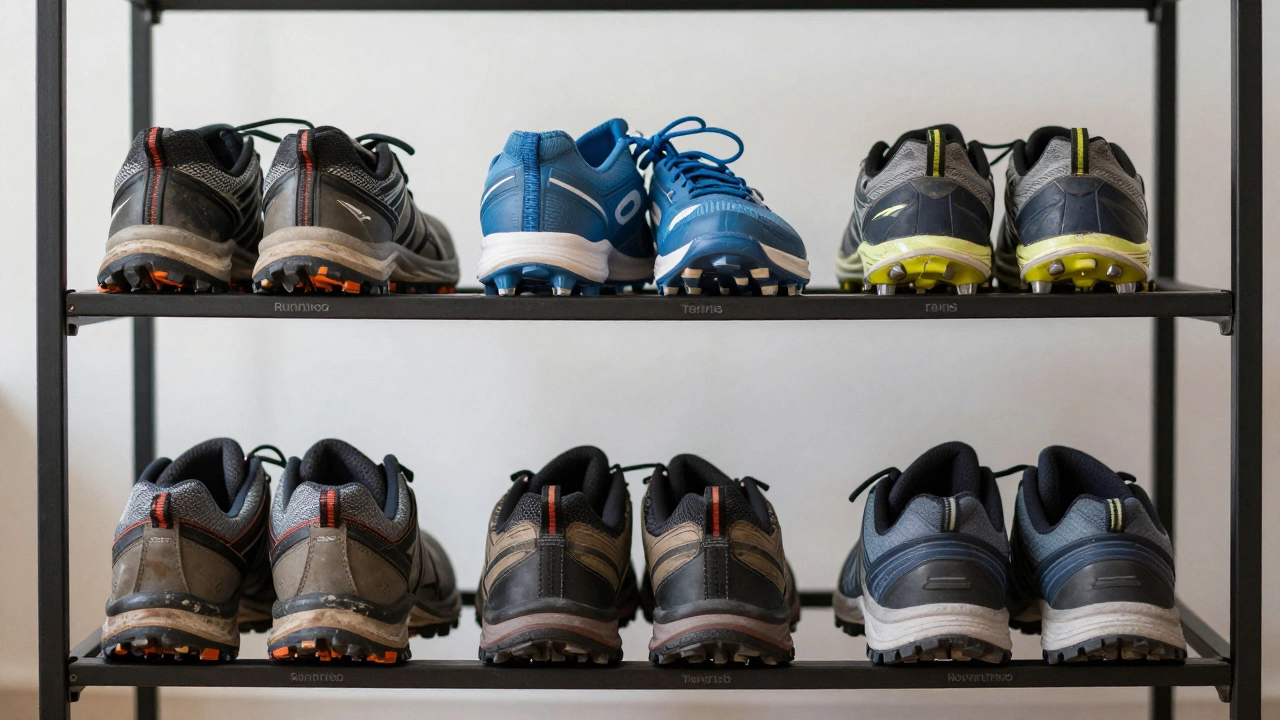
- Using one pair for everything: No shoe is perfect for running, lifting, and basketball. Your body deserves better.
- Ignoring foot pain: If your foot aches after a workout, don’t just push through it. Your shoe might be the cause.
There’s no shame in having multiple pairs. Serious athletes rotate shoes to extend their life and reduce repetitive stress on the body.
Final Thought: Your Feet Are Your Foundation
Sports footwear isn’t an accessory. It’s part of your body’s movement system. Just like you wouldn’t ride a bike with flat tires, you shouldn’t train in shoes that don’t support your motion. Whether you’re a weekend jogger or a competitive athlete, the right pair makes every step count.
Take the time to learn what your feet need. Visit a local running store. Get measured. Try a few models. Your knees, hips, and back will thank you years from now.
Is sports footwear the same as athletic shoes?
Yes, the terms are used interchangeably. "Sports footwear" is a broader term that includes all shoes designed for physical activity - running, basketball, tennis, hiking, etc. "Athletic shoes" is a common synonym, especially in North America. Both refer to performance-driven footwear, not casual wear.
Can I use running shoes for the gym?
You can, but it’s not ideal. Running shoes are built for forward motion and have soft, cushioned soles that compress under heavy weights. This makes them unstable for squats, deadlifts, or lateral movements. For gym workouts, a cross-trainer with a flat, firm sole gives better balance and power transfer.
How often should I replace my sports footwear?
Most running shoes last 300-500 miles. For gym or multi-sport shoes, replace them every 6-12 months with regular use. Signs it’s time: flattened midsole, worn-out tread, or new aches in your feet, knees, or back. Don’t wait until they’re falling apart.
Do I need different shoes for different sports?
Yes. Each sport puts different stresses on your feet. Basketball needs ankle support and grip for quick cuts. Running needs cushioning for heel impact. Tennis requires lateral stability. Using one pair for everything increases injury risk and reduces performance.
Are expensive sports shoes worth it?
Not always. Price doesn’t always equal performance. A $150 shoe isn’t necessarily better than a $80 one if it doesn’t fit your foot or match your gait. Focus on fit, function, and support - not brand or price tag. Many mid-range shoes offer excellent technology without the premium markup.