Running Shoe Mileage Calculator
How Often Should You Replace Your Shoes?
Based on the article's 300-500 mile rule for running shoe replacement.
Your Shoe Replacement Timeline
Enter your details to see your replacement schedule.
Remember: Shoe replacement depends on mileage, not time. Foam degrades with use and age.
Key Signs Your Shoes Are Done
- Knees, shins, or arches hurt more than usual
- Feeling like running on rocks
- Midsole foam doesn't spring back when pressed
- Outsole worn through on heel or big toe
- Shoes older than 18-24 months (even with low mileage)
Most runners know they need to replace their shoes eventually-but too many wait until their feet start screaming. That’s too late. Running shoes don’t last forever, and ignoring their wear can lead to shin splints, plantar fasciitis, or worse. So how often should you actually change your running shoes? The answer isn’t a fixed number of months-it’s based on how much you run, how you run, and what your shoes are made of.
The 300- to 500-Mile Rule
The most reliable guideline among coaches, physical therapists, and shoe manufacturers is this: replace your running shoes between 300 and 500 miles. That’s the sweet spot where the midsole foam starts losing its bounce. You won’t see a big tear or hole, but the cushioning breaks down silently. Think of it like a mattress-you don’t notice it getting lumpy until you’re lying on it and your back aches.
That means if you run 20 miles a week, you’ll need new shoes every 15 to 25 weeks-roughly every 4 to 6 months. If you run 40 miles a week, you’re looking at every 8 to 12 weeks. It’s not about time. It’s about mileage. A runner who logs 100 miles a month will outlive their shoes faster than someone who runs 20 miles a month, even if they’ve had them for a year.
How to Track Your Mileage
Most running watches and apps like Strava, Garmin, or Nike Run Club automatically track your distance. If you don’t use one, keep a simple log. Write down each run in a notebook or a notes app. Add up the total every month. That’s the easiest way to know when you’re approaching the 500-mile mark.
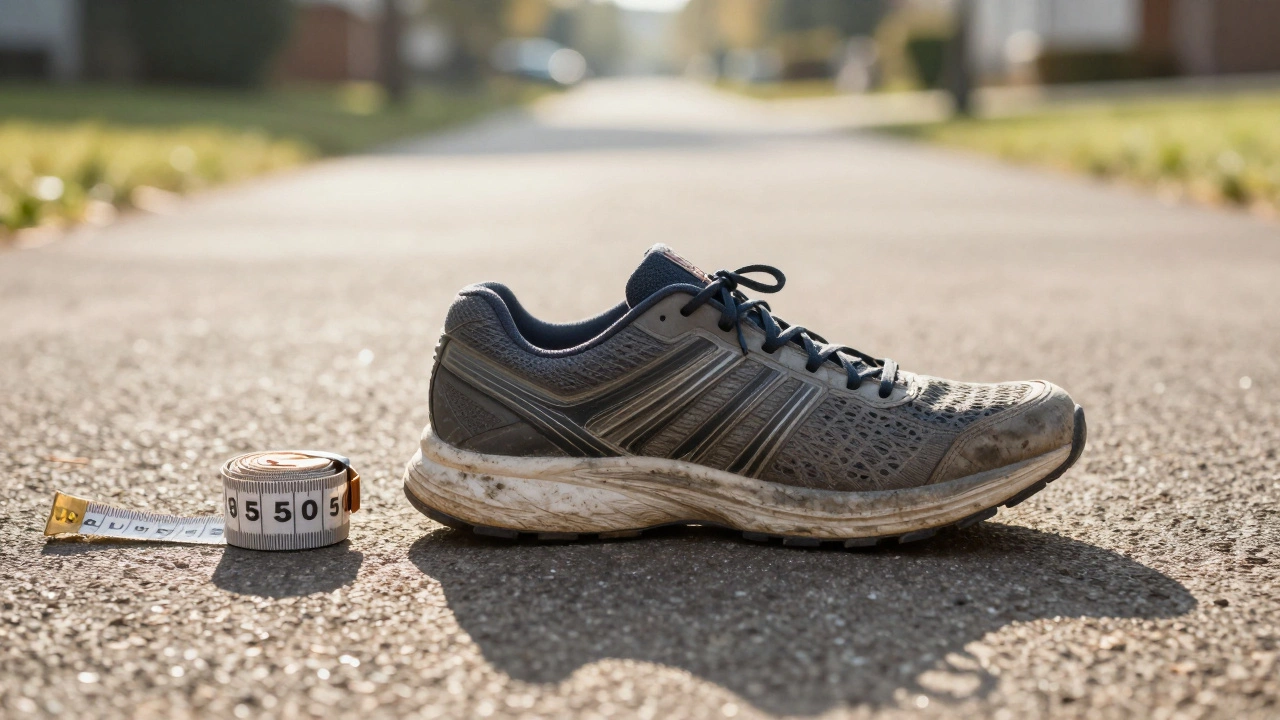
Don’t rely on how your shoes look. A shoe with worn-out tread might still have good cushioning. And a shoe with clean outsoles might be dead inside. The foam in the midsole compresses over time-it doesn’t spring back. Even if the outside looks fine, the inside is losing its ability to absorb shock.
Signs Your Shoes Are Done
You don’t need a gadget to tell you when it’s time. Your body will. Here are the real red flags:
- Your knees, shins, or arches hurt more than usual after runs-even when you didn’t change your route or pace.
- You feel like you’re running on rocks, even on smooth pavement.
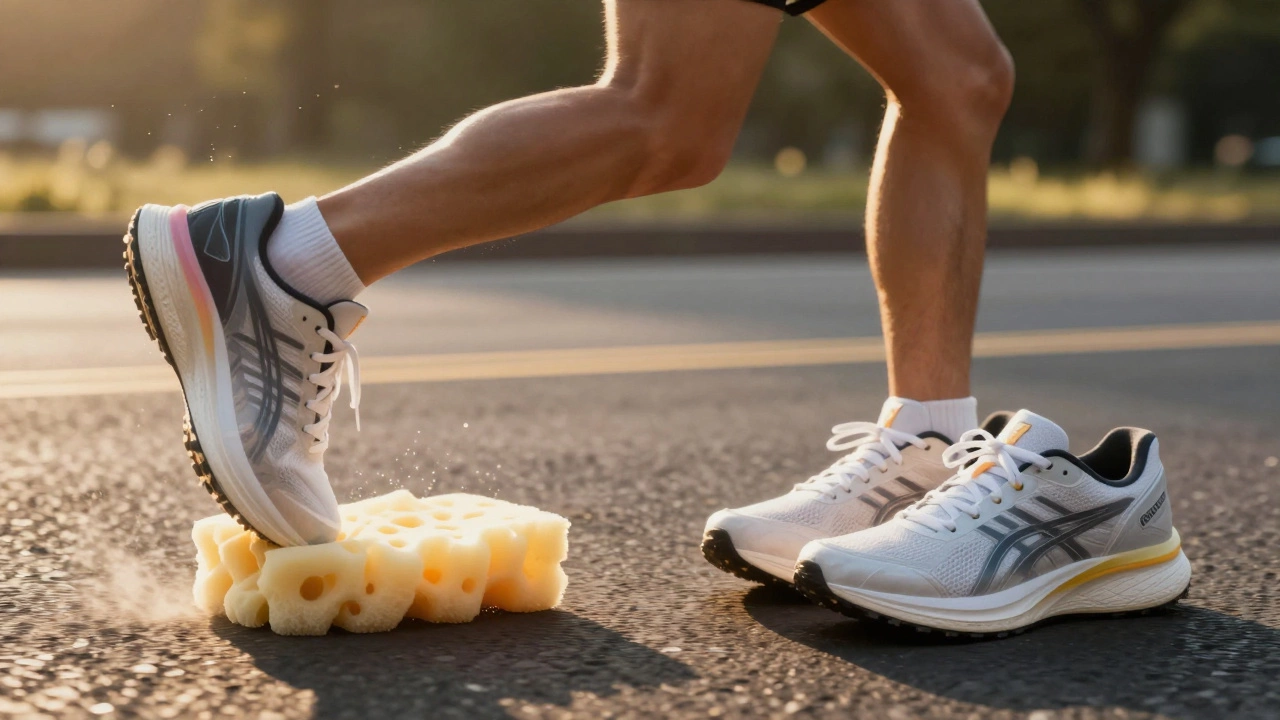
- The shoe feels flatter underfoot. Try pressing your thumb into the heel or forefoot. If it doesn’t spring back, the foam is gone.
- The outsole is worn through on the heel or big toe side. That’s not always a dealbreaker, but paired with other symptoms, it’s a sign.
- You’ve had them for over a year and you’re running regularly. Even if you haven’t hit 300 miles, foam degrades with age.
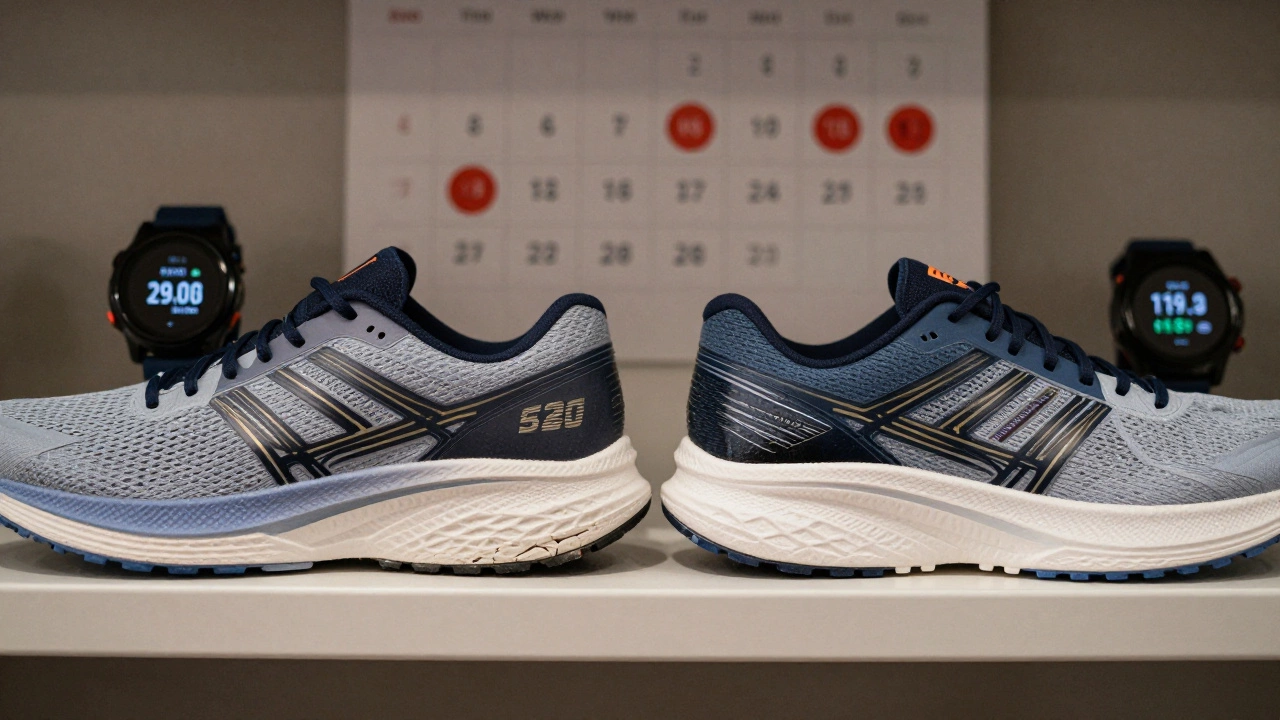
One runner in Melbourne told me she switched shoes after her heel started clicking on the pavement. She thought it was her gait. Turns out, the midsole had compressed so much the plastic heel counter was hitting the ground. She’d been running 25 miles a week for 14 months. Her shoes had 520 miles on them.
Shoe Type Matters
Not all running shoes are built the same. Lightweight racing flats or trail shoes don’t last as long as everyday trainers. A pair of Nike Pegasus might last 500 miles. A pair of Hoka Clifton could hit 600. A pair of Saucony Kinvara, designed to be minimal, might only make it to 350.
Trail shoes take more abuse. Rocks, mud, and roots wear out the outsole faster. If you run mostly on trails, expect to replace your shoes closer to the 300-mile mark. Road runners can stretch it to 500 if they’re on smooth pavement and have good form.
Heavier runners (over 180 lbs / 82 kg) compress the foam faster. If you’re in this category, aim for the lower end of the range-closer to 300-400 miles. Lighter runners (under 130 lbs / 59 kg) might get 500+ miles.
Storage and Age Matter Too
Shoes degrade even if you’re not running in them. Foam breaks down over time due to oxygen exposure and temperature changes. If you’ve got a pair of running shoes sitting in your closet for two years, they’re probably not fresh anymore-even if you’ve only worn them twice.
Most manufacturers recommend replacing shoes after 18 to 24 months, regardless of mileage. That’s because the glue, mesh, and foam all start to dry out. I’ve seen runners bring in shoes with 200 miles on them that were 3 years old. They felt like cardboard. The cushioning was gone. No amount of running could bring it back.
What Happens If You Wait Too Long?
Running in worn-out shoes doesn’t just feel bad-it’s risky. Studies from the Journal of Orthopaedic & Sports Physical Therapy show that runners who use shoes beyond 500 miles have a 30% higher chance of overuse injuries. The body compensates for poor cushioning by changing your stride. That puts extra stress on your Achilles, knees, and hips.
One runner I know switched shoes after 600 miles. Within two weeks, he developed plantar fasciitis. His doctor said it was from the lack of arch support. He’d been relying on the shoe’s cushioning to hold his foot in place. Once that faded, his foot collapsed inward with every step.
Don’t wait for pain. Replace before it starts.
How to Buy Your Next Pair
Don’t wait until your current shoes are completely dead. Buy your next pair before you need them. That way, you can break them in slowly while your old ones still have some life left.
Wear your new shoes for short runs-1 to 3 miles-three times a week. Let your feet adjust. After two weeks, swap them fully. This avoids injury from sudden changes in shoe fit or feel.
Don’t buy based on looks. Don’t buy because a friend loves them. Go to a specialty running store. Walk or jog on a treadmill while they watch your gait. They’ll match you to a shoe that suits your foot shape and stride. Brands like Brooks, ASICS, and New Balance have models designed for overpronators, neutral runners, and high arches. Your shoe should feel like a second skin-not a tool you’re forcing your foot into.
What About Recycled or Discounted Shoes?
Buying used running shoes is risky. Even if they look clean, you have no idea how many miles they’ve logged or how the foam has degraded. A $20 pair from a thrift store might be 400 miles old and already collapsed. You’re not saving money-you’re risking injury.
Discounted new shoes? That’s fine. Many stores sell last season’s models at 30-50% off. As long as they’re brand new and you know they’ve been stored properly, they’re a smart buy. Just check the date code on the sole. If it’s older than 18 months, walk away.
Final Tip: Rotate Your Shoes
Want to make your shoes last longer? Rotate two pairs. Run in one pair Monday, Wednesday, Friday. Use the other pair Tuesday, Thursday, Saturday. Letting each pair rest 24-48 hours lets the foam recover slightly. It’s like giving your muscles a rest day. Studies show this can extend shoe life by 10-15%.
It’s not about having fancy gear. It’s about smart habits. Your feet carry you through rain, heat, and long miles. Treat them like the engine they are.
How do I know if my running shoes are worn out if they still look fine?
Look at the midsole foam. Press your thumb into the heel or forefoot. If it doesn’t spring back, the cushioning is gone. Also, pay attention to your body-if your knees or arches hurt more than usual, or you feel like you’re running on concrete, it’s time. Appearance doesn’t tell the whole story.
Can I use running shoes for walking or gym workouts?
You can, but it’s not ideal. Running shoes are designed for forward motion. Walking shoes have more heel support and less cushioning in the forefoot. Gym shoes need lateral stability for side-to-side movements. Using running shoes for cross-training can wear them out faster and increase injury risk. Stick to one pair for running, another for the gym.
Should I buy the same model again if I like my current shoes?
Yes-if they’ve worked for you. Shoe designs change slightly every year. But if you’ve had no injuries and they feel great, stick with the same model. Many runners find their perfect shoe and stick with it for years. Just check the latest version for any fit changes before buying.
Do expensive running shoes last longer than cheaper ones?
Not necessarily. A $180 shoe might last 500 miles. A $100 shoe might last 450. What matters is the foam quality and how you use them. High-end shoes often have better materials, but if you’re a light runner on pavement, a mid-range shoe can serve you just as well. Focus on fit and function, not price tag.
Is it okay to run in the same shoes for a marathon?
Only if they’ve got 100-200 miles on them and still feel supportive. Never race in brand-new shoes. And never race in shoes over 500 miles. Your best bet: run your last long training run in your race shoes, then rest them for 48 hours before race day. That way, they’re broken in but still fresh.