Most runners don’t realize their foot type affects every step they take. Wearing the wrong running shoes because you didn’t know your arch type or how your foot rolls can lead to plantar fasciitis, shin splints, or knee pain. It’s not about buying the shiniest shoe on the shelf-it’s about matching your foot’s natural movement to the right support. Here’s how to figure out your foot type without a fancy lab or expensive gait analysis.
Step 1: Do the Wet Foot Test
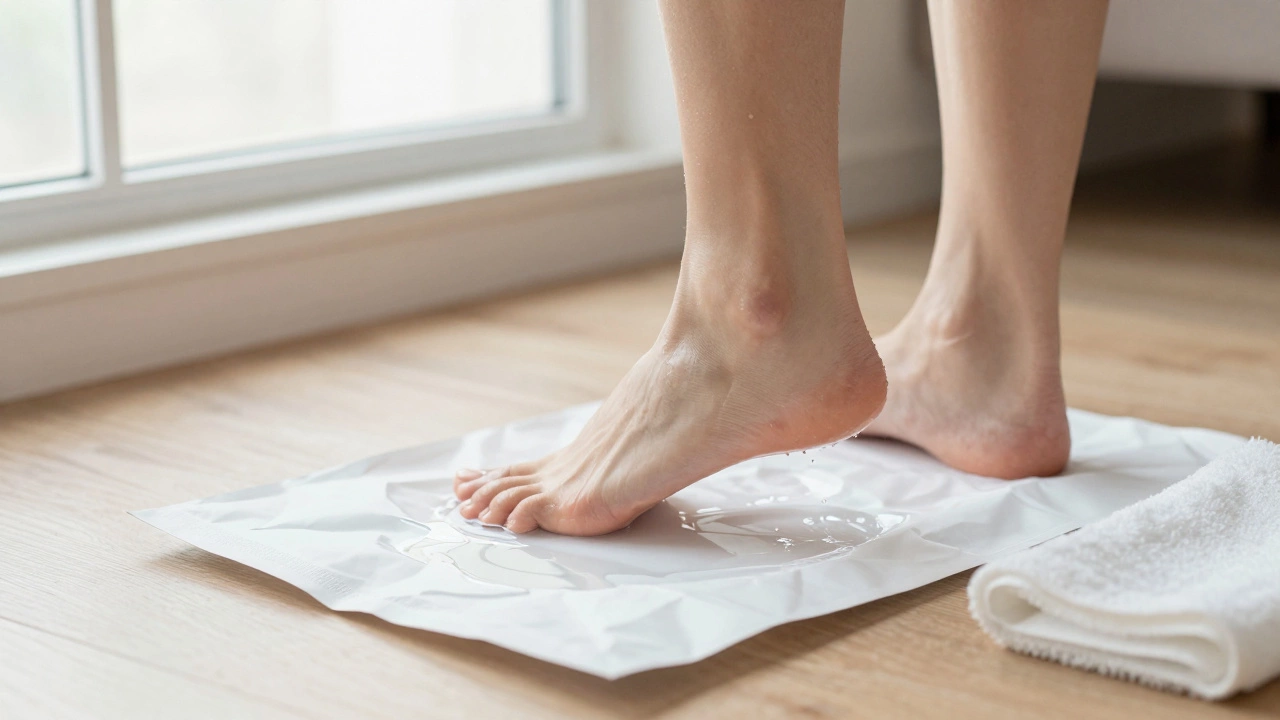
This is the simplest way to start. All you need is a flat surface, a paper bag, and your bare foot. Step into a shallow pan of water, then step onto the paper. Step away and look at the imprint.- If you see almost the full outline of your foot-with a wide connection between the heel and forefoot-you have flat feet (low arches).
- If you see about half your arch, with a clear curve along the inside, you have a normal arch.
- If you see just the heel, ball of the foot, and a thin line connecting them, you have high arches.
Don’t overthink it. This isn’t a science exam. You’re not looking for perfection-you’re looking for the general shape. A 2023 study from the University of Melbourne’s Sports Science Lab found that 68% of runners misjudged their arch type by guessing, but only 12% got it wrong after doing the wet test.
Step 2: Check Your Old Running Shoes
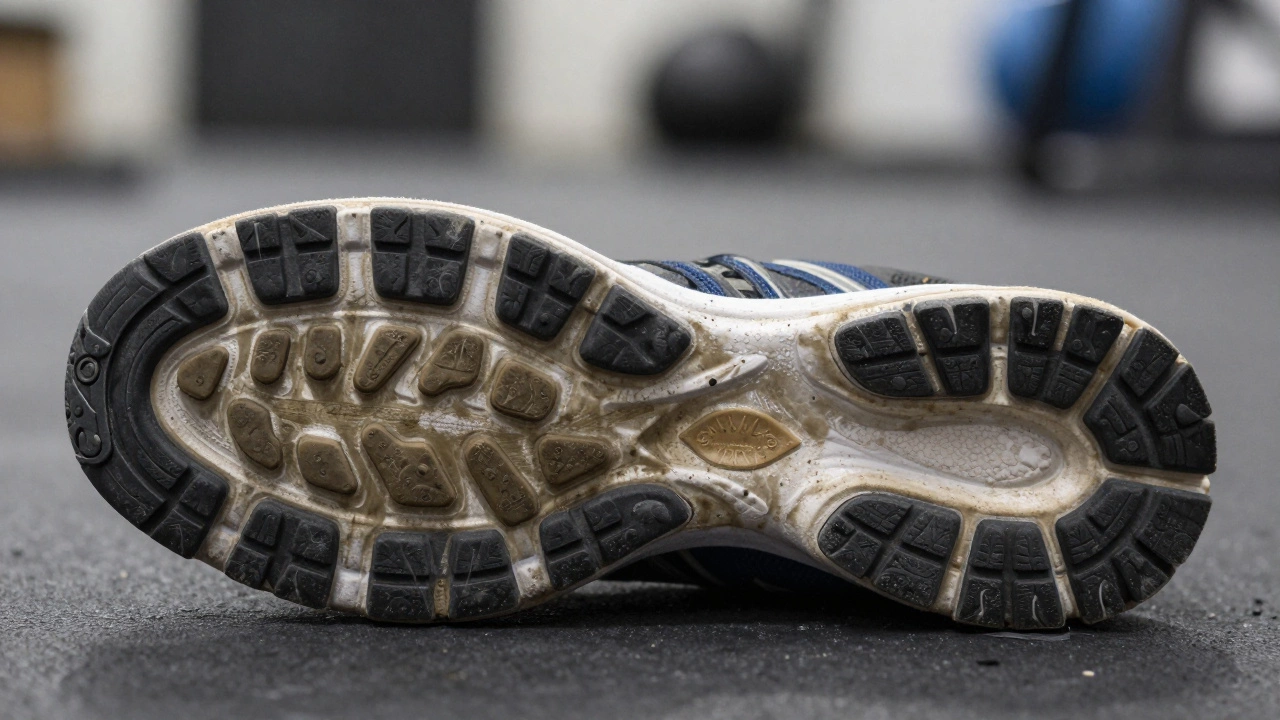
Look at the bottom of your most worn pair. Pay attention to where the tread is worn down.- If the wear is mostly on the inside edge of the sole, especially under the ball of the foot and big toe, you likely overpronate. That means your foot rolls inward too much when you land.
- If the wear is mostly on the outside edge, you probably supinate (underpronate). Your foot doesn’t roll inward enough, so impact hits harder on the outer side.
- If the wear is even across the sole, you have a neutral gait. Your foot rolls inward just enough to absorb shock.
Old shoes tell you what your body actually does-not what you think it does. One runner I know kept buying stability shoes because she thought she had flat feet. Her worn-out shoes showed clear supination. She switched to a cushioned shoe and cut her knee pain in half within two weeks.
Step 3: Understand Pronation-It’s Not a Flaw
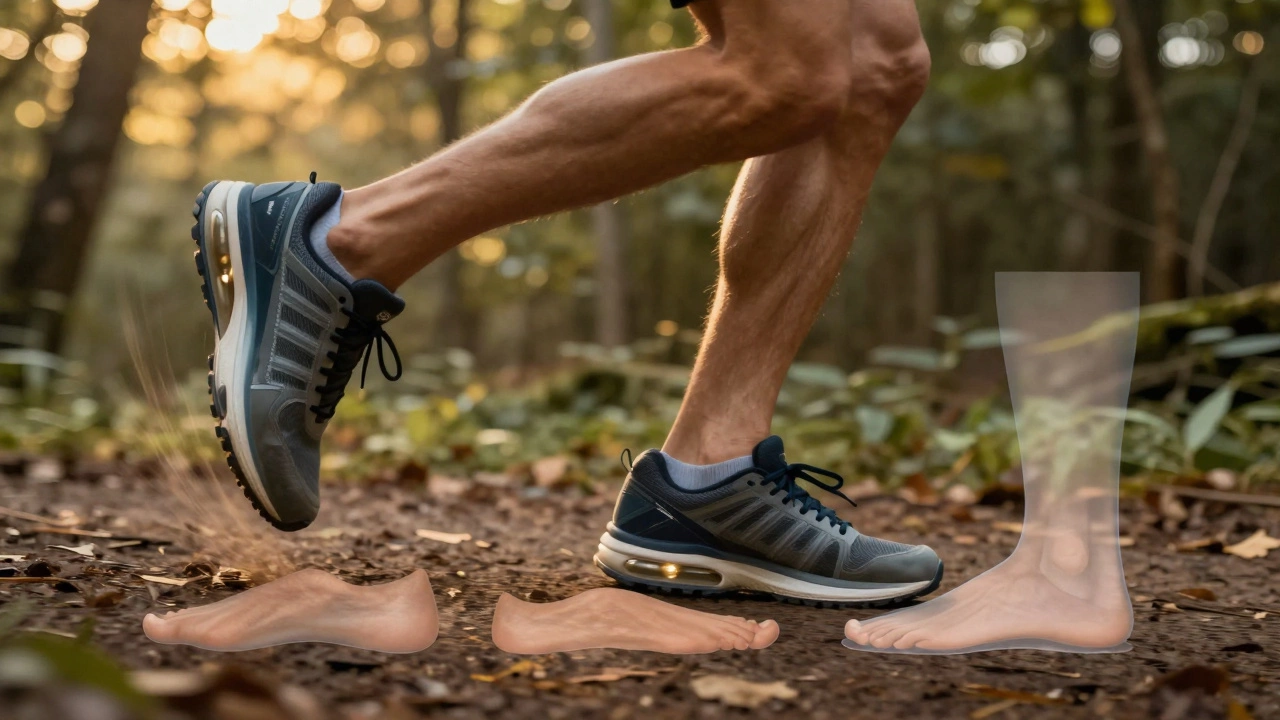
Pronation is your foot’s natural way of absorbing shock. It’s not good or bad. It’s just how your body moves.- Overpronation (common in flat feet): The foot rolls inward past the ideal point. This stresses the ankles and knees. Shoes with medial support or motion control help.
- Neutral pronation (normal arch): The foot rolls inward about 15%. This is the ideal movement. Most shoes work fine here.
- Supination (common in high arches): The foot doesn’t roll inward enough. Impact stays on the outside of the foot. You need cushioned, flexible shoes that absorb shock.
Don’t let brands scare you with terms like “overpronator” like it’s a diagnosis. It’s just a description. Your foot type doesn’t make you broken-it just tells you what kind of support you need.
Step 4: Try Shoes in Person-Not Online
You can’t judge fit by reading reviews or watching YouTube videos. You need to walk, jog, and maybe even hop in the store.Go to a specialty running store in the late afternoon. Your feet swell during the day, so that’s when they’re closest to their running size. Wear the socks you run in. Ask them to watch your gait as you walk on a treadmill. Good stores will film you and break down your foot movement.
Here’s what to feel for:
- Does the heel lock in without slipping?
- Is there enough room for your toes to wiggle? (Your big toe should not press against the front.)
- Does the arch support match your imprint? (It shouldn’t dig in or feel like there’s a gap.)
- Does the shoe feel stable when you push off?
Don’t buy shoes that feel “broken in.” If they hurt at the store, they’ll hurt on the trail. A 2024 survey of 1,200 Australian runners found that those who bought shoes based on foot type had 47% fewer injuries over six months than those who bought based on looks or brand.
Step 5: Match Your Foot Type to Shoe Categories
Most running shoes fall into three main categories based on foot type. Here’s how they line up:| Foot Type | Pronation | Best Shoe Type | What to Look For |
|---|---|---|---|
| Flat Feet | Overpronation | Stability or Motion Control | Firm midsole, medial post, structured heel counter |
| Normal Arch | Neutral | Cushioned or Neutral | Even cushioning, flexible sole, moderate arch support |
| High Arch | Supination | Cushioned or Flexible | Soft midsole, curved last, no rigid support |
Brands like Brooks, ASICS, and Hoka have clear lines for each category. Brooks Adrenaline GTS? Stability. Hoka Bondi? Cushioned. Altra Paradigm? Motion control. You don’t need to memorize models-just know the category your foot needs.
What If You’re in Between?
Some people don’t fit neatly into one box. Maybe your arch looks normal, but your shoes wear unevenly. Or you have high arches but still roll inward a bit.That’s fine. Go with what your body tells you. If you feel instability, lean toward stability shoes. If you feel like you’re hitting the ground too hard, go for extra cushion. Your foot doesn’t care about labels-it cares about comfort and pain-free miles.
One runner I spoke to had high arches but overpronated slightly. She tried a stability shoe and hated it. Then she tried a cushioned shoe with a slightly wider base. It felt perfect. She’s been running pain-free for two years.
Common Mistakes to Avoid
- Buying shoes based on looks: That neon green pair might be the most popular, but if it’s a stability shoe and you’re a supinator, it’ll feel stiff and unnatural.
- Assuming bigger = better: More cushion doesn’t mean better support. High arches need softness, not bulk.
- Ignoring wear patterns: If your last pair wore out on one side, don’t buy the same model again without checking why.
- Waiting until you’re injured: Don’t wait for pain to start. Get your foot type checked before your first 5K.
When to Reassess
Your foot type doesn’t change often-but your body does. If you gain or lose significant weight, have an injury, or start running on new surfaces (like trails instead of pavement), your gait can shift.Every 6-12 months, do a quick check:
- Look at your shoe wear again.
- Do the wet test.
- Ask yourself: Do my shoes still feel right?
If the answer is no, it’s time to re-evaluate. You don’t need a new pair every time-but you do need to stay aware.
Can I use orthotics with running shoes?
Yes, but only if you need them. Many stability shoes already have built-in arch support. If you’re using custom orthotics, choose a neutral shoe with a removable insole. Don’t stack support-you’ll end up with too much rigidity and possible discomfort. Talk to a podiatrist if you’re unsure.
Do children need to know their foot type for running shoes?
Generally, no. Kids’ feet are still developing, and their gait changes until around age 10. Focus on fit, flexibility, and room to grow. Avoid stiff, overly supportive shoes unless a doctor recommends them. Let their feet move naturally.
Is a gait analysis at a running store worth it?
It can be, but it’s not required. Most good stores use the wet test and shoe wear as their main tools. If they’re using a high-speed camera and complex software, that’s fine-but make sure they explain what they’re seeing in plain terms. If they just hand you a shoe without talking through your movement, walk out.
What if I have one flat foot and one normal arch?
You’re not alone. About 1 in 5 runners have asymmetrical foot types. Buy two different shoes, or get a neutral shoe that works for both. Some runners use a stability shoe on the flat side and a cushioned one on the normal side. It’s not ideal, but it’s better than forcing one shoe to do two jobs.
Can I run barefoot if I have flat feet?
Some people can, but it’s risky without proper transition. Flat feet rely on shoe support to reduce strain. Going barefoot too fast can lead to tendonitis or arch collapse. If you want to try minimalist shoes, do it slowly-start with 10 minutes a week and build up over months. Listen to your body.
Final Tip: Your Feet Are Unique
There’s no universal rule that says everyone with high arches needs the same shoe. Your weight, running style, mileage, and terrain all matter too. But knowing your foot type gives you a starting point. It turns guesswork into confidence.Take the wet test. Check your old shoes. Walk in a store. Try a few pairs. You don’t need to be an expert. You just need to be honest with your feet. They’ll thank you with fewer injuries and more miles.