Playground Equipment Age Guide
Child's Age
Recommended Equipment
Playground equipment isn’t just a collection of metal and plastic toys. It’s a carefully designed system built to let kids move, explore, and grow - all while staying safe. If you’ve ever watched a child climb a jungle gym, swing high into the air, or spin wildly on a merry-go-round, you’ve seen playground equipment in action. But what exactly counts as playground equipment, and why does it look the way it does?
What Counts as Playground Equipment?
Playground equipment includes any structure or fixture meant for children to play on outdoors. It’s not random. Every piece serves a purpose: building strength, improving balance, encouraging social play, or helping kids learn risk in a controlled way. Common types include:
- Swings - Single seats, tire swings, or group benches that let kids soar back and forth.
- Slides - Straight, curved, or spiral chutes that turn climbing into a fast, fun ride.
- Climbing frames - Structures with ropes, nets, bars, and walls designed to challenge coordination and upper body strength.
- Seesaws - Balanced boards that let two kids take turns lifting and lowering each other.
- Merry-go-rounds - Rotating platforms that teach spatial awareness and teamwork.
- Monkey bars - Horizontal bars spaced for kids to swing from one to the next.
- Interactive panels - Spinners, mazes, and sound panels that encourage sensory play.
These aren’t just random additions. Each one targets a different part of child development. Swings help with vestibular processing - that’s the body’s sense of movement and balance. Climbing structures build muscle and problem-solving. Even something as simple as a seesaw teaches kids about cause and effect, fairness, and timing.
Why Design Matters
Not all playground equipment is made the same. A backyard swing set looks different from one in a public park. That’s because public equipment follows strict safety standards. In Australia, the AS 4685 standard covers everything from gap sizes to fall heights. For example, the space between bars on a climbing frame must be small enough to prevent a child’s head from getting stuck - a rule born from real injuries.
Materials matter too. Steel and plastic are common, but modern designs use UV-resistant plastics that don’t get too hot in the sun. Ropes are made from synthetic fibers that won’t rot or snap. Even the ground under the equipment has rules: it must be soft. That’s why you see wood chips, rubber tiles, or sand beneath swings and slides. Concrete? Never. A fall from a height of just 1.5 meters can cause serious injury on hard surfaces.

What’s Missing from Modern Playgrounds?
Twenty years ago, playgrounds had tall towers, steep slides, and no safety nets. Kids climbed higher, jumped farther, and took more risks. Today, many playgrounds feel too safe - almost too quiet. Experts argue that over-protection can hurt development. A study from the University of Melbourne in 2023 found that children who played on equipment with moderate risk - like high swings or uneven climbing nets - showed better decision-making and emotional resilience than those who only used low, padded structures.
That’s why some newer playgrounds are bringing back managed risk. Think: rope bridges that sway, climbing walls with varying difficulty levels, or slides that start high and end in a sand pit. These aren’t dangerous. They’re challenging. And kids learn more from a little fear than from total safety.
Who Uses Playground Equipment?
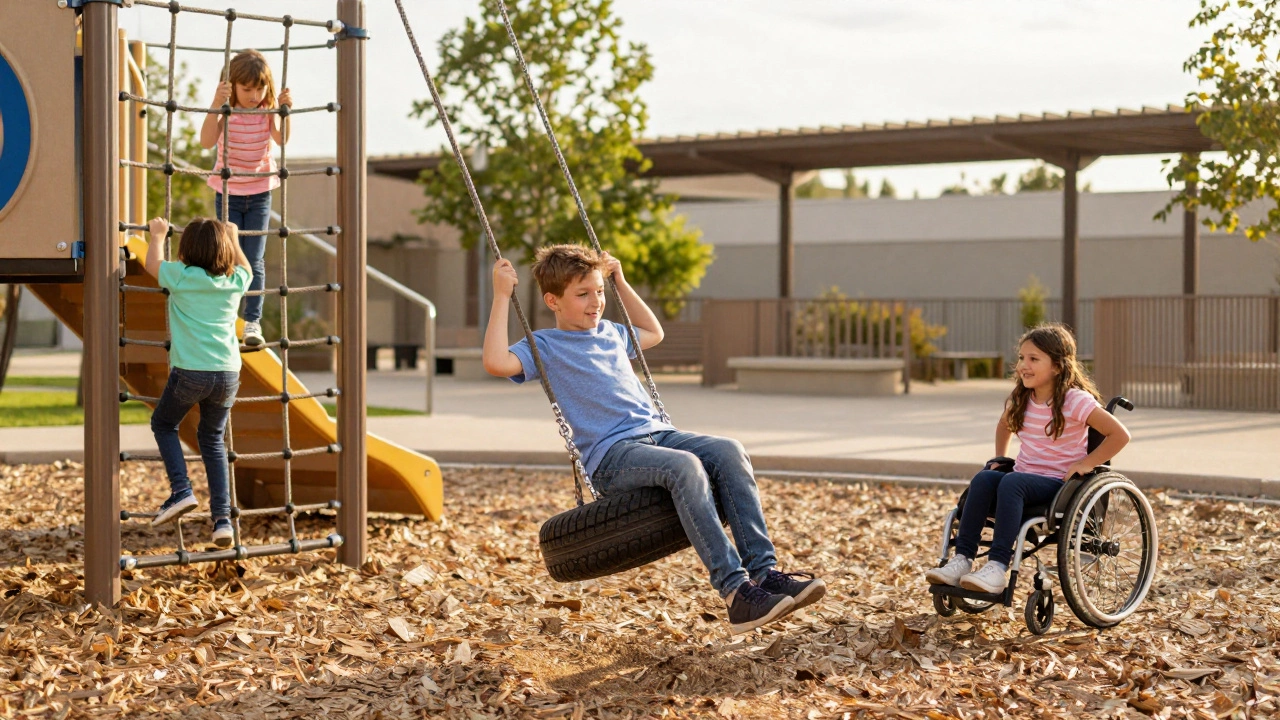
Most people think of toddlers and school-aged kids. But playground equipment isn’t just for children. Many public parks now include adaptive equipment designed for kids with physical or sensory needs. Wheelchair-accessible swings let children with mobility challenges swing just like their peers. Sensory panels with textures, sounds, and lights help kids on the autism spectrum explore their environment. Even parents and caregivers benefit - benches, shaded areas, and clear sightlines make supervision easier.
Playgrounds are community spaces. They’re where kids learn to take turns, negotiate rules, and handle disappointment. That’s just as important as the physical activity.
How to Choose Playground Equipment
If you’re planning a home playground or helping a school or council make a decision, here’s what to look for:
- Age range - Equipment should match the kids using it. Toddlers need low, enclosed structures. Older kids need height and challenge.
- Safety surfacing - Always check what’s under the equipment. Rubber tiles last longer than wood chips. Sand needs regular raking.
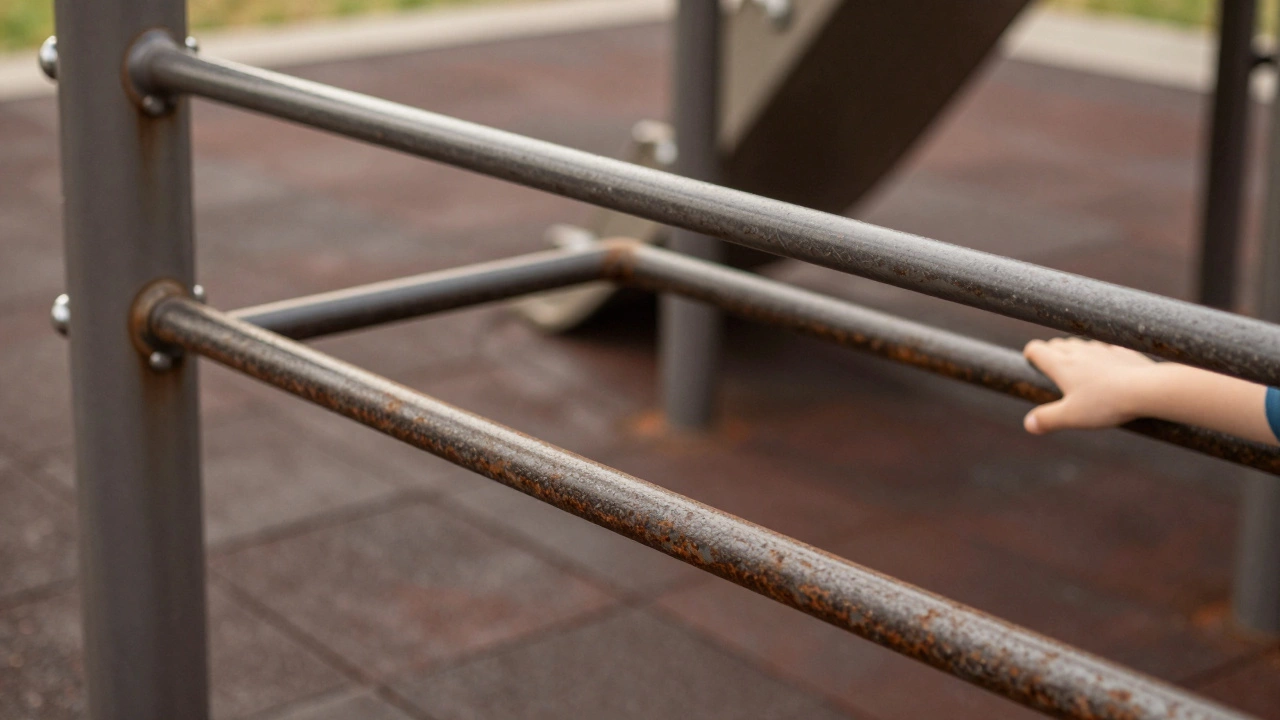
- Maintenance - Metal can rust. Plastic can crack. Check for signs of wear. A well-maintained playground is safer.
- Space - Allow at least 2 meters of clear space around every piece. That’s the safety zone.
- Shade and water - Especially in Australia, sun protection is non-negotiable. A shaded play area reduces heat stress and sunburn risk.
Don’t just copy what you see online. Watch kids play. Notice what they gravitate toward. The best playgrounds aren’t the flashiest - they’re the ones kids keep coming back to.
The Bigger Picture
Playground equipment might seem simple. But it’s one of the few public spaces designed purely for unstructured play. Unlike sports fields or gyms, it doesn’t require rules, teams, or coaches. It’s open, free, and available to everyone. In cities like Melbourne, where outdoor time is limited by weather or urban density, playgrounds become vital. They’re not just about fun - they’re about health, social growth, and even equity.
When a child climbs to the top of a tower for the first time, they’re not just reaching a platform. They’re building confidence. That’s the real purpose of playground equipment.