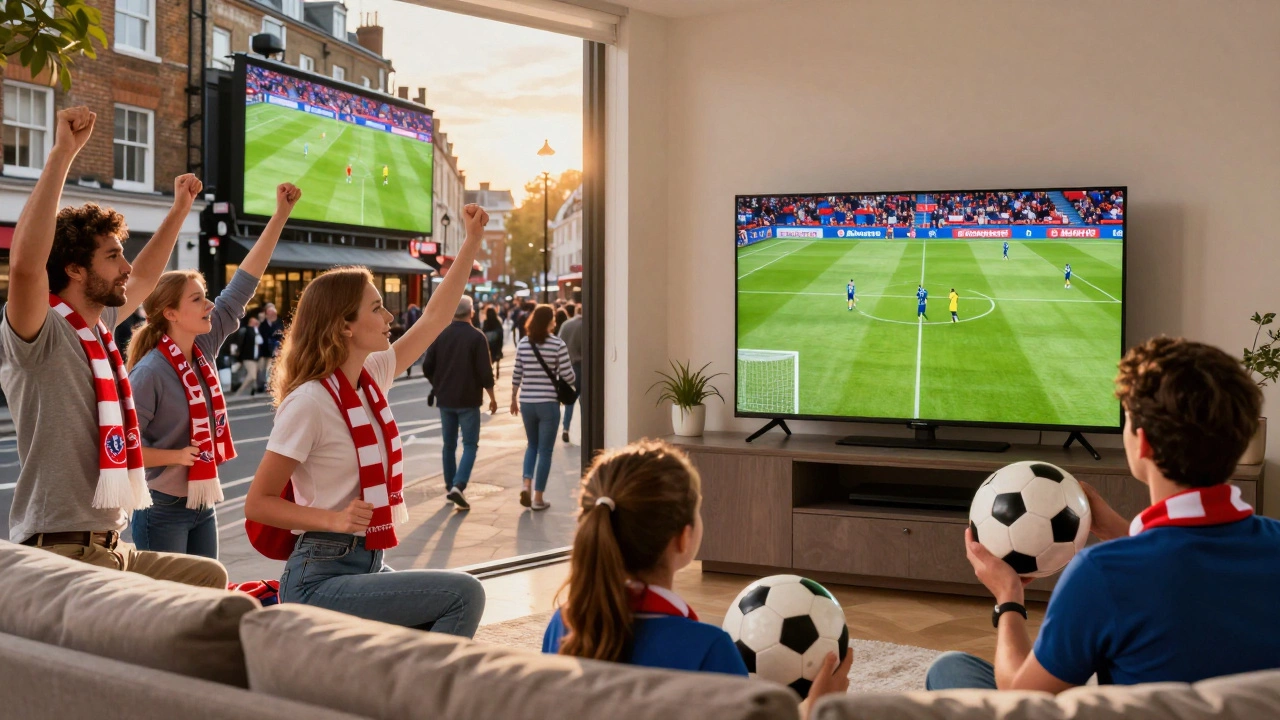
Soccer vs. Football Country Checker
Ever heard someone say "soccer" and another say "football" and wondered if they’re talking about the same game? It’s not a trick question - they are. But the confusion isn’t just about words. It’s about history, culture, and where you grew up. If you’re watching a match in Melbourne, London, or Lagos, the rules are the same. The ball, the goals, the 11 players on each side - all identical. So why do some countries call it soccer and others call it football?
It’s the same game, just different names
The sport played with a round ball, two teams of eleven, and no hands (except for the goalkeeper) is officially called association football. That’s the full name registered by the sport’s global governing body, FIFA. In most of the world, people shorten that to "football." In the United States, Canada, Australia, and a few other places, it’s called "soccer." Why? Because back in the late 1800s, Britain had several types of football being played at schools - rugby football, association football, and others. To tell them apart, people started calling association football "soccer," short for "assoc."
When British settlers moved to places like Australia and the U.S., they brought the game with them. But in those countries, "football" already meant something else - American football in the U.S., Australian rules football in Australia. So to avoid confusion, "soccer" stuck around. In England, where the game was born, "soccer" faded out after the 1970s. Today, if you say "soccer" in London, most people think you’re American.
Rules don’t change, just the labels
Whether you call it soccer or football, the rules are written the same way by the International Football Association Board (IFAB). The field is rectangular, goals are 7.32 meters wide and 2.44 meters high, and a match lasts 90 minutes divided into two 45-minute halves. Offside rules, foul calls, penalty kicks - all identical. A goal scored in Brazil counts the same as one scored in Sydney. There’s no hidden difference in how the game is played.
The only variations you’ll see are in style. Brazilian teams might focus on flair and dribbling. German teams often emphasize structure and discipline. Dutch teams play "total football," switching positions fluidly. But these are tactics, not rules. The game’s foundation hasn’t changed since 1863, when the Football Association in England wrote down the first official rules.
Why does the name matter?
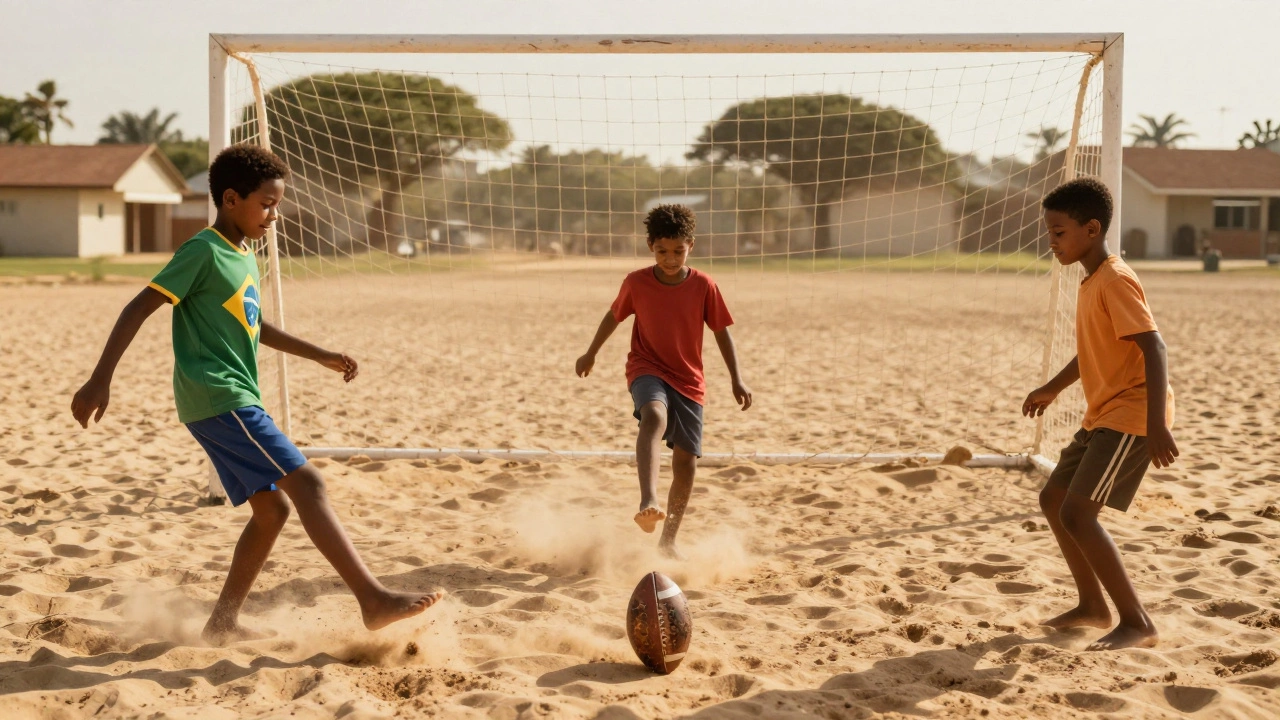
Names carry weight. Calling it "football" in Europe or South America isn’t just tradition - it’s identity. The sport is woven into daily life. In Brazil, kids play barefoot on beaches. In Italy, families gather around TVs for Serie A matches on Sunday afternoons. In Nigeria, local tournaments fill dusty fields with cheering crowds. For them, "football" isn’t a sport - it’s culture.
In the U.S., "soccer" is often treated as a minor sport compared to American football, basketball, or baseball. That’s changing. MLS attendance has grown over 60% since 2015. Youth soccer participation in the U.S. now exceeds 3 million players. But the name "soccer" still signals it’s not the main event. In Australia, where Australian rules football dominates in Victoria and South Australia, "soccer" is used to distinguish the global version. In Melbourne, you’ll hear both terms, but "football" usually means Aussie Rules unless you’re at a World Cup match.
Global reach, local names
Here’s how the names break down around the world:
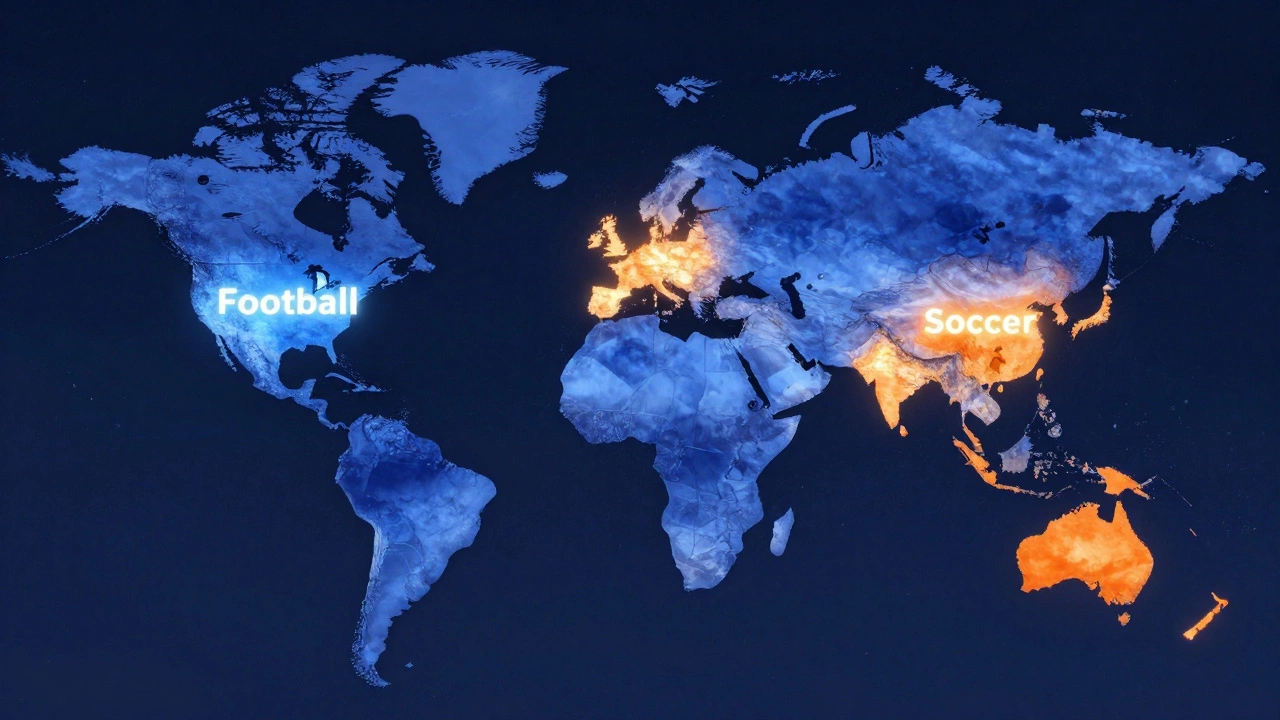
- Football: Used in Europe, South America, Africa, Asia, and Oceania (except Australia and New Zealand). This includes countries like Brazil, Germany, Japan, Egypt, and Argentina.
- Soccer: Used primarily in the United States, Canada, Australia, New Zealand, and occasionally in Ireland. In Ireland, "soccer" is used to differentiate from Gaelic football.
- Other names: In Spain, it’s "fútbol." In France, "foot." In China, it’s "zúqiú" (足球), meaning "foot ball."
Even within countries, usage can vary. In Canada, "football" means Canadian football (a gridiron sport), so "soccer" is the default term. In South Africa, it’s "football," but fans might say "footie" casually. In India, "football" is used, though cricket still dominates media attention.
What happens when the names collide?
Imagine an Australian fan telling an English friend they’re going to a "football" match. The English friend assumes it’s the global game. But if the Australian means Aussie Rules football - a totally different sport with an oval ball, no offside rule, and high-flying marks - confusion follows. That’s why context matters.
At the 2022 World Cup in Qatar, Australian players were called "the Socceroos," not "the Footballers." The name stuck because it helped distinguish them internationally. But when they play in Europe, they’re just another national team in the "football" world.
The same goes for the U.S. national team. They’re called "the USMNT" (United States Men’s National Team), but fans and media call them "Team USA Soccer." The name "soccer" is a tool for clarity abroad. Domestically, it’s just the game they love.
It’s not about the name - it’s about the passion
At the end of the day, whether you call it soccer or football, the emotion is the same. The roar after a goal. The tension of a penalty shootout. The way strangers hug after a win. The heartbreak of a last-minute loss. None of that changes with a word.
Children in Tokyo, teenagers in Lagos, and retirees in Manchester all feel the same rush when their team scores. The ball doesn’t care what you call it. The net doesn’t care if you say "goal" or "soccer goal." The game is universal. The name is just a label.
So if someone in Melbourne says "football," and you’re from the U.S. and say "soccer," you’re not wrong. You’re just speaking a different dialect of the same language. The game is the same. The passion is the same. The world is watching.
Is soccer the same as football?
Yes, soccer and football refer to the exact same sport: association football. The difference is only in the name, based on regional language habits. In most of the world, it’s called football. In the U.S., Canada, Australia, and New Zealand, it’s commonly called soccer to avoid confusion with local versions of football.
Why do Americans call it soccer?
Americans call it soccer because in the late 1800s, the U.S. already had its own version of football - American football. To distinguish the two, people shortened "association football" to "soccer." The term stuck, even as Britain dropped it in the 1970s. Today, "football" in the U.S. means the gridiron sport with pads and helmets.
Do the rules change depending on the name?
No. The rules are set by the International Football Association Board (IFAB) and are the same worldwide. Whether you call it soccer or football, the field size, goal dimensions, offside rule, and match duration are identical. Only the terminology and cultural context change.
Is Australia the only country that uses both terms?
No, but Australia is one of the clearest examples. In Australia, "football" usually refers to Australian rules football or rugby league, depending on the state. To avoid confusion, the global version is called "soccer." Other countries like Ireland and Canada also use "soccer" to distinguish from their own football codes.
When did the term "soccer" start being used?
"Soccer" originated in England in the 1880s as slang for "association football," shortening "assoc." to "soccer." It was widely used in Britain until the 1970s. After that, it became associated with American usage, and British media stopped using it. The term survived in countries where "football" meant something else.
Does FIFA call it soccer or football?
FIFA, the global governing body, officially calls the sport "football." Its full name is the Fédération Internationale de Football Association. In its official documents, broadcasts, and websites, it uses "football." However, in the U.S. and Canada, FIFA adapts to local usage and sometimes uses "soccer" in marketing materials to avoid confusion.