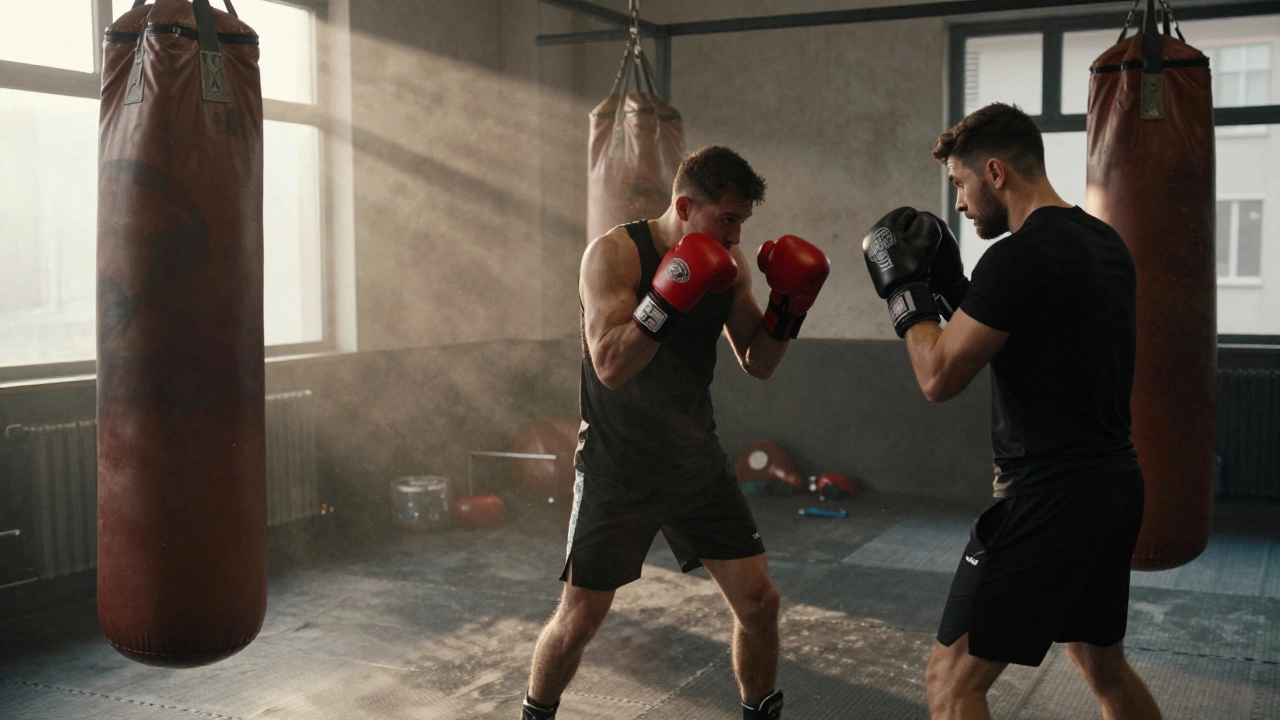
Boxing Combo Builder
Select Your Punches
Click the numbers to build your combination sequence.
Combination Sequence
The Quick Breakdown: What 1, 2, and 3 Actually Are
Before we get into how to chain these together, you need to know what each digit represents. While some old-school gyms might have slight variations, almost every modern camp follows this standard:- 1 = The Jab: This is your lead hand (left hand for orthodox fighters). It's a straight punch used to measure distance, distract the opponent, and set up heavier shots.
- 2 = The Cross: This is your rear hand (right hand for orthodox). It's a powerful straight punch that travels across the body, utilizing the rotation of your hips to deliver maximum force.
- 3 = The Lead Hook: This is a horizontal punch thrown with your lead hand. Instead of going straight, it curves around the opponent's guard to hit the side of the jaw or temple.
| Number | Punch Name | Hand Used (Orthodox) | Primary Purpose |
|---|---|---|---|
| 1 | Jab | Left | Distance & Distraction |
| 2 | Cross | Right | Power & Knockout |
| 3 | Lead Hook | Left | Changing Angles / Flanking |
Mastering the 1-2-3 Combination
When a coach calls for a boxing punch numbers sequence like "1-2-3," they aren't just asking for three random hits. They are asking for a specific flow of energy and weight transfer.First, you throw the 1 (Jab). This snaps the opponent's head back and blinds them for a split second. Immediately, you transition into the 2 (Cross). Because the jab pushed the opponent back or made them blink, the cross often lands with full force. Finally, you pivot your lead foot and whip the 3 (Lead Hook) around their guard.
The magic of the 1-2-3 is the weight shift. You start with weight on the back foot for the jab, shift it forward for the cross, and then rotate your core to bring the hook around. If you don't move your hips, you're just slapping the air. Try this: imagine you're stepping around a corner of a building; that's the kind of rotational energy you need for the hook at the end of the sequence.
Why Use Numbers Instead of Names?
Why not just say "Jab, Cross, Hook"? Because in the heat of a fight, words are too long. A boxing match is a high-speed game of chess. If a coach yells "Jab, Cross, Hook!" by the time they finish the sentence, the window of opportunity to hit the opponent has already closed.Using numbers reduces the cognitive load on the athlete. It turns a verbal instruction into a trigger. When a fighter hears "1-2-3," the brain doesn't process the words; it triggers a pre-programmed muscle memory sequence. This is similar to how musicians use numbers or letters to denote chords in a song. It allows the fighter to focus on the opponent's movement rather than trying to remember the vocabulary of the sport.
The Role of the Lead Hand in the 1-2-3
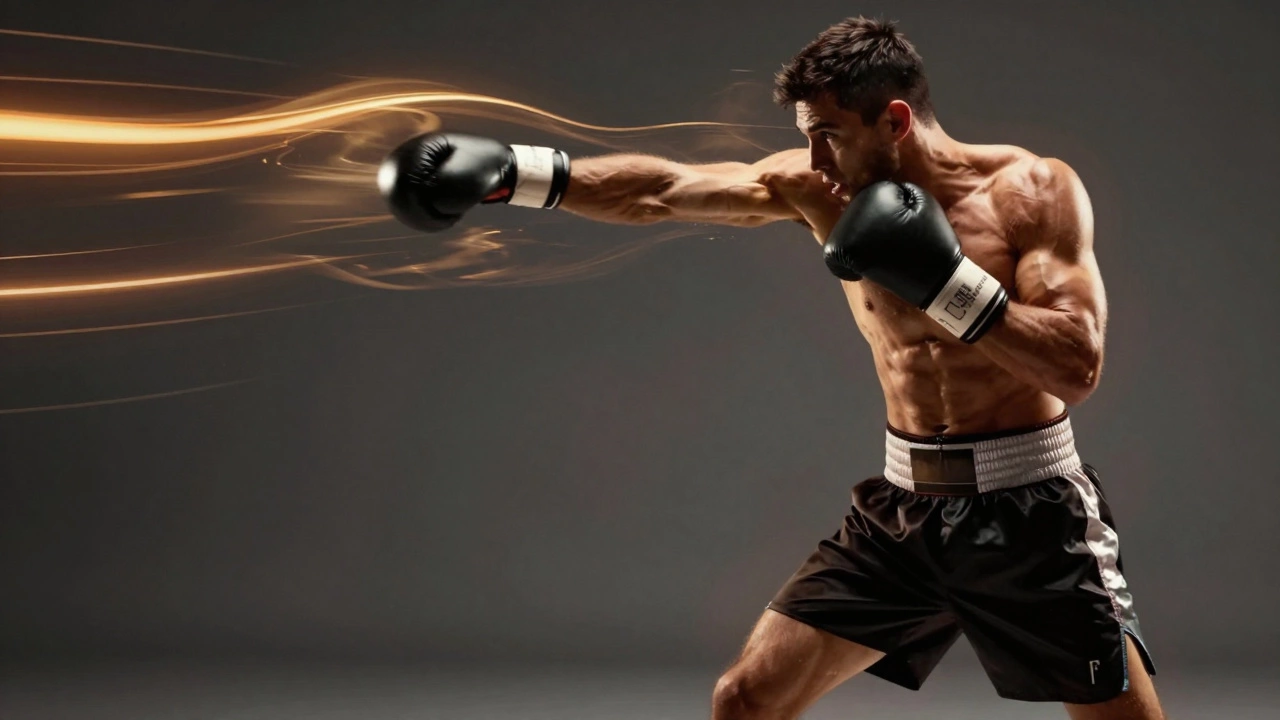
Notice that the 1 and the 3 both come from the same hand. This is a critical part of boxing strategy. Orthodox Stance is the most common boxing stance where the left hand and foot are forward. In this stance, your left hand does double duty.The jab (1) is a linear weapon. It goes straight. The hook (3) is a circular weapon. By combining them in a 1-2-3, you are attacking your opponent from two different geometric planes. First, you hit them from the front (1 and 2), and then you hit them from the side (3). This makes it incredibly difficult for an opponent to keep their guard in the right place. If they cover up against the straight punches, the hook slips right around their gloves.
Common Mistakes When Throwing the 1-2-3
Many beginners treat the 1-2-3 like they are pushing a button on a controller. They throw the punches as separate events. This is a mistake. A combination should feel like one continuous movement.One common error is "dropping the hand." When people throw the 2 (Cross), they often let their left hand (the jab hand) drop to their chest. This leaves them wide open to a counter-punch. Your non-punching hand should always be glued to your face. When you throw the 2, your left hand should be protecting your chin. When you throw the 3, your right hand should be in place.
Another pitfall is the "arm punch." This happens when someone throws the 1-2-3 using only their shoulders and arms. If you don't rotate your hips on the cross and the hook, you're essentially just poking the opponent. To fix this, focus on your feet. Your back foot should pivot like you're crushing a cigarette butt into the floor when you throw that number 2.
Expanding the Code: What Happens After 3?
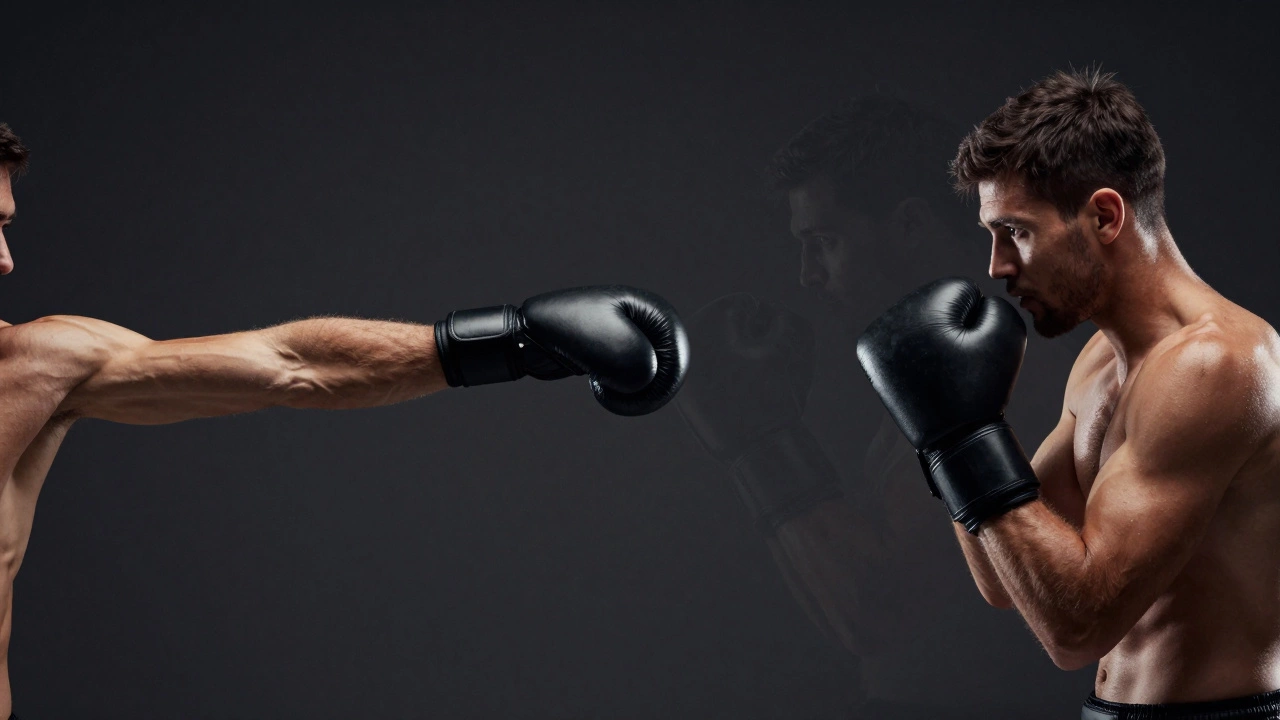
Once you've mastered the 1-2-3, you'll find that the numbering system continues. While the 1, 2, and 3 are the foundation, most gyms add more to the list to cover all the bases:- 4 = Rear Hook: A power hook thrown with the back hand.
- 5 = Lead Uppercut: A punch that travels vertically from the bottom up, targeting the chin.
- 6 = Rear Uppercut: The same as the 5, but from the back hand.
By adding these, a coach can call out a "1-2-5」" (Jab, Cross, Lead Uppercut) or a "1-6-3" (Jab, Rear Uppercut, Lead Hook). The complexity increases, but the logic remains the same. The numbers allow for endless creativity in how a fighter attacks, creating a language that is fast, efficient, and deadly in the ring.
Putting It All Together in the Ring
To truly use the 1-2-3 effectively, you have to pair it with footwork. You can't just stand still and throw. A pro fighter will step slightly to the left as they throw the 3 (Lead Hook), moving their head off the center line. This prevents the opponent from firing back with their own cross while you're mid-combination.Think of the 1-2-3 as a tool for "opening the door." The jab opens the door, the cross pushes through it, and the hook finishes the job. Whether you're training for a competitive bout or just hitting a heavy bag for fitness, understanding this numerical shorthand is the first step toward thinking like a real boxer.
Does 1-2-3 change if I am Southpaw?
The numbers represent the *function* and *relative position* of the punch, not the specific hand. For a Southpaw (right hand forward), the 1 is still the jab (now the right hand), the 2 is still the cross (now the left hand), and the 3 is still the lead hook (now the right hand). The sequence remains the same; only the hands swap.
Can I throw a 1-2-3 without a coach calling it?
Absolutely. In fact, you should. The goal of learning these numbers is to internalize them so you can execute the combinations instinctively during a fight. Once the muscle memory is there, you don't need the numbers anymore-you just see an opening and react.
Is the lead hook (3) more powerful than the cross (2)?
Generally, no. The cross (2) is typically the most powerful punch because it carries the full weight of the rear leg and hip rotation. However, the hook (3) is often more surprising and harder to see coming, which can make it feel more impactful if it lands cleanly on the chin.
What is the best way to practice the 1-2-3 combination?
Start with a heavy bag to get the rhythm. Focus on the "snap" of the jab, the "drive" of the cross, and the "wrap" of the hook. Once you feel comfortable, move to double-end bags to work on timing, and finally, use focus mitts with a partner who can give you feedback on your balance and guard.
Why do some people call the lead hook a 'number 5' instead of '3'?
While the system I've described is the most common, boxing isn't perfectly standardized. Some old-school trainers use different systems where they might number uppercuts before hooks. If you enter a new gym, it's always a good idea to ask the coach, "What's your numbering system?" just to be sure.