Tennis Scoring Simulator
Player A
Player B
Match History
You’re watching a tense match at the Australian Open. The crowd goes silent as the server steps up to the line. The scoreboard reads 15-0. But then, the receiver hits a winner down the line. The umpire calls out, "Love-15." If you’re new to the sport, that word might sound like a typo or a joke. Why would a competitive sport use a term associated with affection to mean nothing? It seems contradictory. You’d expect "zero," "nil," or "nothing." Instead, tennis players and fans around the world say "love."
This quirk isn’t random. It’s one of those historical artifacts that survived while everything else changed. To understand why we say love for zero, we have to look back hundreds of years, past the modern grand slams and high-tech rackets, into the muddy courts of medieval France. The answer lies in language evolution, clock faces, and perhaps a bit of philosophical irony.
The French Connection: L’Oeuf and the Egg
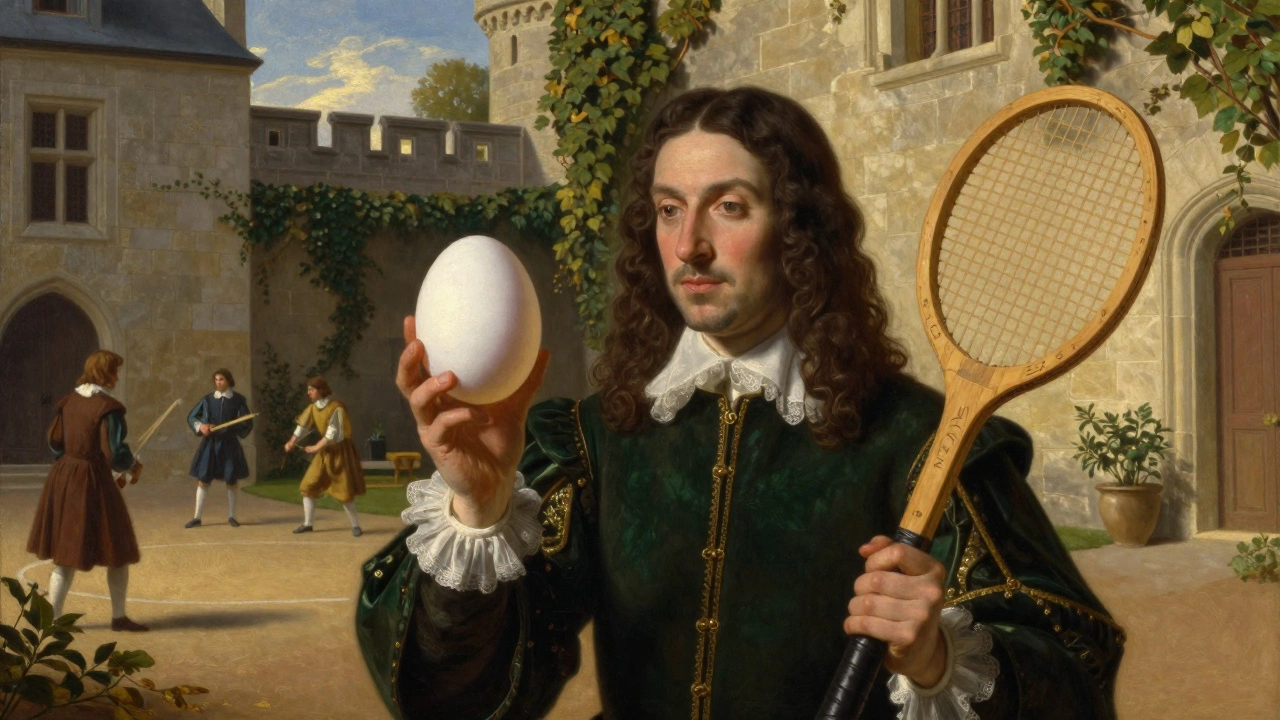
The most widely accepted theory traces the word back to the French language. In the 16th century, tennis (then known as jeu de paume or "game of the hand") was gaining popularity among the European nobility. The scoring system we use today-15, 30, 40-was standardized during this era. But what about zero?
In French, the word for egg is l'oeuf, which is the French word for egg, phonetically similar to 'love'. When an egg is empty, it has no content. Visually, an egg resembles the number zero. As the game crossed the English Channel from France to England, the pronunciation shifted. English speakers heard "l'oeuf" and adapted it to fit their own phonetic habits. Over time, "l'oeuf" became "love."
This theory makes sense because many other sports terms have French origins. Words like "deuce," "advantage," and even "tennis" itself come from the French tenez (meaning "hold on" or "there you go"). The linguistic drift from l'oeuf to "love" is a classic example of how languages borrow and reshape words over centuries.
| Tennis Term | Origin Language | Original Word/Meaning |
|---|---|---|
| Love | French | L'oeuf (egg) |
| Deuce | French | Deux (two) - referring to two points needed to win |
| Tennis | French | Tenez! (Hold on! / Receive!) |
| Court | French | Cour (enclosed space) |
The Clock Face Theory
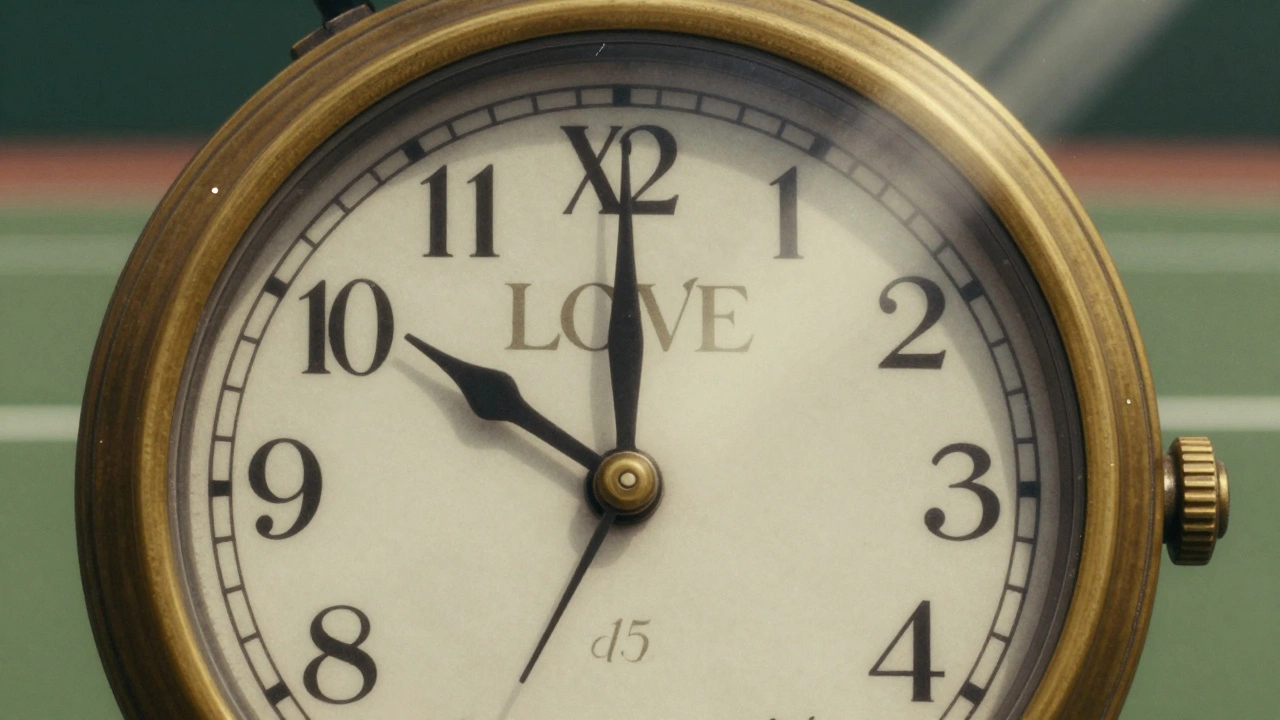
While the egg theory is popular, another compelling explanation involves the clock face. Early tennis scoring used a clock to keep track of points. Each point moved the hand forward by 15 minutes. So, the first point was 15, the second was 30, the third was 45 (which eventually shortened to 40), and the fourth was 60 (or "game").
If you look at a traditional analog clock, the position of zero-or the start of the hour-is at the top, often marked by a XII or simply the absence of a number. Some historians argue that "love" comes from the idea of playing "for naught" or "for nothing." In old French, the phrase à l'amour meant "for love" or "for nothing." This aligns with the concept of playing a game without any stake or reward, purely for enjoyment. However, this interpretation is less direct than the egg theory and lacks strong documentary evidence.
Still, the clock analogy helps explain why the scores jump in increments of 15. It wasn’t arbitrary; it was visual. Players could glance at a large wall clock and instantly see who was leading. Today, we don’t use clocks for scoring, but the numbers remain embedded in our vocabulary.
Playing for Love: A Philosophical Angle
There’s also a more poetic explanation. In the 17th century, it was common to play games "for love," meaning without betting money. If you played a round of cards or a set of tennis just for fun, you were playing "for love." Therefore, if you had no points, you were still playing "for love." This theory suggests that "love" doesn’t mean zero in the sense of emptiness, but rather in the sense of purity or lack of material gain.
This interpretation adds a layer of charm to the sport. Tennis has always been associated with elegance and etiquette. Calling zero "love" softens the blow of losing a point. It reminds players that the game is ultimately about participation and skill, not just winning. Of course, when you’re down 0-40 in the fifth set of Wimbledon, it feels less like romance and more like disaster.
How Scoring Evolved Over Time
To fully appreciate why "love" sticks, we need to look at how the entire scoring system developed. Modern tennis scoring is a hybrid of several older systems. Before the 19th century, scoring varied wildly between regions. Some places counted every point sequentially (1, 2, 3...). Others used different increments.
The current system solidified in the late 1800s with the formation of the All England Club, which later hosted the Wimbledon Championships. They adopted the 15-30-40 structure because it was already familiar to players coming from real tennis (the indoor predecessor to lawn tennis). Real tennis had complex scoring rules involving "points," "games," and "sets," but the core idea of moving in 15-minute intervals remained.
One interesting detail is the jump from 40 to "game." Why not 60? One theory is that people naturally shorten words. "Sixty" became "six," then "sick," then dropped entirely. Another theory is that the clock face didn’t go all the way to 60 for the final point; instead, reaching the next hour (60) signaled the end of the game. Thus, 40 was the last numbered point before the game concluded.
- First Point: 15 (quarter-hour)
- Second Point: 30 (half-hour)
- Third Point: 40 (shortened from 45)
- Fourth Point: Game (reaching the hour)
Why Doesn't Tennis Change the Word?
In an era where sports are constantly updating rules to make them more viewer-friendly, why hasn’t tennis changed "love" to "zero"? After all, "zero" is clearer for international audiences. Cricket uses "nil," soccer uses "zero," and basketball uses numbers directly.
The reason is tradition. Tennis is deeply rooted in its history. Changing fundamental terminology would alienate long-time fans and disrupt the cultural identity of the sport. Imagine if cricket suddenly stopped saying "wicket" or baseball stopped calling it a "strike." It wouldn’t just be confusing; it would feel wrong.
Moreover, "love" has become part of the global lexicon of tennis. Even non-English speakers learn to say "love" when watching matches. At the Roland Garros tournament in Paris, commentators say "amour-love" or simply "love." In Australia, we say "love" with our distinct accent. The word transcends language barriers because it’s unique to the sport.
Additionally, the ambiguity of "love" adds a certain mystique. It forces newcomers to ask questions, which leads to deeper engagement with the game’s history. It’s a conversation starter. When I explain to friends why we say love, they remember it forever. If we said "zero," it would blend in with every other sport.

Other Quirky Tennis Terms
"Love" isn’t the only oddball term in tennis. The sport is full of jargon that sounds archaic or nonsensical to outsiders. Understanding these terms helps demystify the game.
Deuce: This occurs when both players reach 40-40. The term comes from the French deux, meaning two. Historically, at deuce, a player needed two consecutive points to win the game. Hence, "two" points required. Today, you still need two points, but you can alternate them (win one, lose one, win again).
Advantage: Shortened from "ad-vantage," this indicates that a player has won the point after deuce and is one step away from winning the game. If they lose the next point, the score returns to deuce.
Let: Used when a serve touches the net but lands in the correct box. The word comes from the Old French laisser, meaning "to let pass" or "to allow." It’s a free redo.
Fault: A serve that misses the service box. This term is straightforward, but its persistence highlights tennis’s adherence to formal language.
| Term | Definition | Origin |
|---|---|---|
| Deuce | Tied at 40-40 | French deux (two) |
| Advantage | One point ahead after deuce | Shortening of "advantage" |
| Let | Serve hits net but lands in | Old French laisser (to allow) |
| Fault | Invalid serve | General English legal term |
The Global Impact of Tennis Terminology
Tennis is played in over 100 countries. Despite this global reach, the English-derived scoring system remains dominant. Even in countries where English isn’t spoken, the terms are often borrowed directly. In Japan, they say "rabu" for love. In Germany, it’s "liebe" or simply "null" depending on the context, but "love" is widely understood.
This uniformity is rare in sports. Soccer uses local terms for goals and fouls. Basketball varies slightly in terminology across continents. Tennis maintains a strict standard, largely due to the influence of the International Tennis Federation (ITF) and the Grand Slam tournaments. These institutions enforce consistent rules and terminology to ensure fair competition and clear communication.
For broadcasters, this consistency is crucial. Commentators worldwide use the same phrases, making it easy for viewers to follow along regardless of their native language. The simplicity of "15," "30," "40," and "love" creates a universal rhythm to the match.
Conclusion: Embracing the Oddity
So, why is 0 called love in tennis? Most likely because of the French word l'oeuf, meaning egg, which sounded like "love" to English ears. Or perhaps it’s because players once competed "for love," without stakes. Either way, the term has stuck for centuries.
Instead of seeing it as a confusing anomaly, view it as a piece of living history. Every time you hear "love-15," you’re connecting with players from the 16th century, the aristocrats of France, and the early enthusiasts of lawn tennis. It’s a small quirk, but it adds character to the game.
Next time you watch a match, listen closely to the scorer. When they call "love," smile. You now know the secret behind the silence.
Is "love" used in other sports?
No, "love" is unique to tennis. Other sports use "zero," "nil," or "nothing." For example, soccer uses "nil," and cricket uses "nought."
Does "love" mean something romantic in tennis?
Not really. While some theories suggest playing "for love" (without betting), the most accepted origin is the French word for egg, l'oeuf. It’s purely a scoring term.
Why do tennis scores go 15, 30, 40?
The scores likely originated from a clock face, where each point moved the hand by 15 minutes. 15, 30, and 45 (shortened to 40) represented the progression toward the hour (60), which signified winning the game.
What happens if the score reaches 40-40?
When the score is 40-40, it’s called "deuce." From deuce, a player must win two consecutive points to take the game. The first point gives them "advantage," and the next point wins the game.
Who invented tennis scoring?
Tennis scoring evolved over centuries, starting with real tennis in medieval France. The modern system was standardized in the 19th century by the All England Club, which organized the first Wimbledon Championships.