Gym Exercise Matcher
Select your primary goal and any physical limitations below to get a customized recommendation for which of the 5 essential exercises to prioritize.
Recommended Routine Structure
You walk into the gym, see rows of shiny machines and racks of weights, and suddenly feel like you need a PhD in biomechanics just to start. It’s overwhelming. But here’s the secret most trainers won’t shout from the rooftops: you don’t need fifty different moves to get strong. You need five. Just five specific patterns that cover every major muscle group and functional movement pattern your body is designed to do.
Whether you’re trying to shed a few kilos before summer or build serious muscle mass, these five compound exercises are the non-negotiables. They aren’t just popular because they look good on Instagram; they work because they force your body to coordinate multiple joints and muscles at once. This article breaks down exactly what they are, why they matter, and how to nail them without injuring yourself.
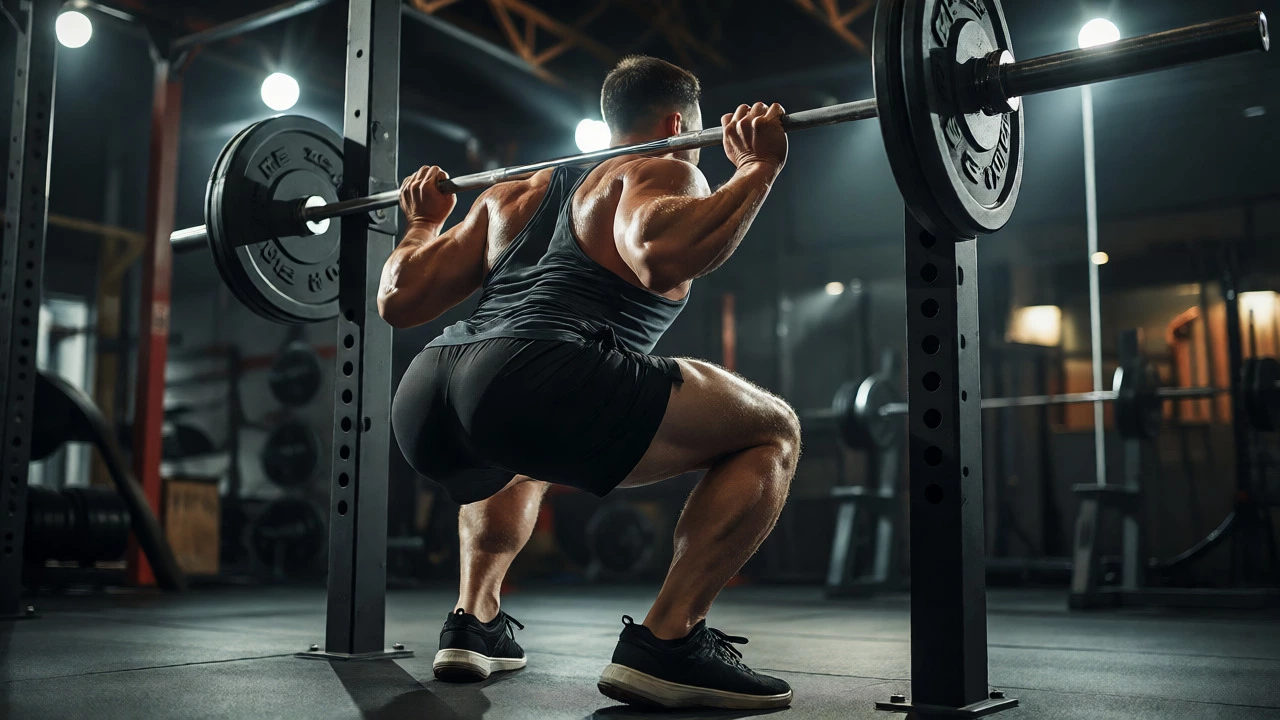
The Squat: The King of Lower Body Strength
If you only ever do one exercise, make it this one. The squat isn’t just about big legs; it’s a full-body stabilizer test. When you perform a proper squat, you’re loading the posterior chain-glutes, hamstrings, and lower back-while demanding core stability to keep your torso upright.
Most beginners mess this up by letting their knees cave inward or rounding their lower back. Think of it like sitting into an invisible chair behind you. Keep your chest proud, feet shoulder-width apart, and drive through your heels as you stand up. If you find yourself leaning too far forward, you might lack ankle mobility. A quick fix? Elevate your heels slightly with small plates or switch to a goblet squat holding a dumbbell at chest height. This variation shifts your center of gravity, making it easier to stay upright while you learn the mechanics.
| Muscle Group | Role |
|---|---|
| Quadriceps | Knee extension (straightening the leg) |
| Gluteus Maximus | Hip extension (pushing hips forward) |
| Hamstrings | Stabilization and hip assistance |
| Core | Anti-flexion (preventing the spine from bending) |
The Deadlift: Total Body Powerhouse
People often confuse squats and deadlifts, but they’re distinct beasts. While the squat is knee-dominant, the deadlift is hip-hinge dominant. This means your hips move backward significantly more than your knees bend. It’s the ultimate posterior chain builder, targeting everything from your calves to your traps.
Why does everyone fear it? Because bad form hurts. The golden rule: keep the bar close to your shins. If the bar drifts away from your legs, your lower back takes all the load. Start with a Romanian Deadlift (RDL) using lighter weights if you struggle with the conventional version. RDLs focus on the stretch in the hamstrings and teach you how to hinge at the hips properly. Remember, this isn’t a squat; you shouldn’t be dropping your hips to the floor. Stop when your torso is roughly parallel to the ground, squeeze your glutes hard, and stand tall.
The Bench Press: Upper Body Pushing Power
The bench press is the classic test of upper body strength. It primarily targets the pectoralis major (chest), anterior deltoids (front shoulders), and triceps. But let’s be real-it’s also where egos go to die. Lifting heavy with poor form leads to shoulder impingements faster than you can say "I’ll add another plate."
To protect your shoulders, tuck your elbows slightly rather than flaring them out to 90 degrees. Imagine you’re trying to bend the bar in half as you push up. This engages your lats and creates a stable base. If you experience pain in the front of your shoulder, try a neutral-grip dumbbell press instead. Dumbbells allow a more natural range of motion and correct imbalances between your left and right sides, which barbells often hide.
The Overhead Press: Shoulder Stability and Strength
Standing overhead press is brutally effective. Unlike seated machine presses, standing forces your core to work overtime to prevent you from falling over. It builds massive shoulders, triceps, and upper back strength.
A common mistake is arching the lower back excessively to get the weight overhead. This turns a shoulder exercise into a lower back strain. Brace your abs as if someone is about to punch you in the gut, squeeze your glutes, and press the bar straight up. Your head should move slightly back as the bar passes your face, then return to a neutral position as you lock out. If you have limited shoulder mobility, start with a landmine press (pressing a barbell anchored in a corner at an angle). It’s much friendlier on the joints while still building pressing strength.
The Pull-Up or Row: Vertical and Horizontal Pulling
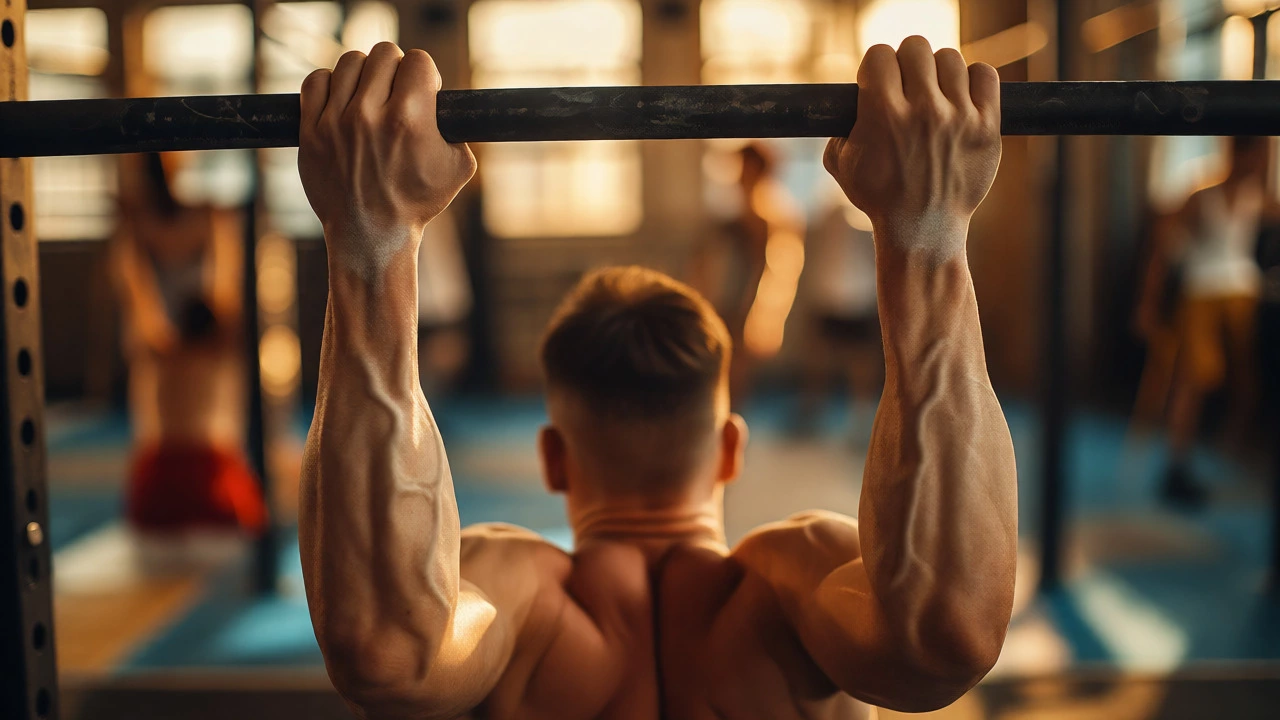
We spend so much time pushing things away (benches, overhead presses) that we forget to pull things toward us. Neglecting pulling movements leads to rounded shoulders and poor posture. For vertical pulling, the pull-up is king. For horizontal pulling, the barbell row is unmatched.
Can’t do a single pull-up? Don’t panic. Use resistance bands looped around the bar to assist you, or use the lat pulldown machine. The goal is to drive your elbows down towards your hips, not just yank with your arms. Squeeze your shoulder blades together at the top. For rows, keep your back flat and pull the bar to your lower chest. Avoid jerking the weight up with momentum; control the descent to maximize muscle engagement.
How to Structure These Into a Routine
Knowing the exercises is half the battle; knowing how to program them is the other half. You don’t need to do all five every day. A simple full-body routine performed three times a week works wonders for beginners and intermediates alike.
- Monday: Full Body A (Squat, Bench Press, Barbell Row)
- Wednesday: Full Body B (Deadlift, Overhead Press, Pull-Ups)
- Friday: Repeat Full Body A
Start with 3 sets of 8-12 repetitions for each exercise. This rep range balances strength and hypertrophy (muscle growth). Rest for 90 seconds to 2 minutes between sets. Once you can hit 12 reps with perfect form, increase the weight by 2.5kg to 5kg and drop back to 8 reps. This is called progressive overload, and it’s the only way to guarantee progress.
Common Pitfalls to Avoid
Even with the best exercises, bad habits can stall your progress. Here are the biggest red flags:
- Ego Lifting: If your form breaks down, the set is over. Period. No one cares how much you lifted if you didn’t complete the range of motion.
- Skipping Warm-ups: Cold muscles tear easily. Spend 5-10 minutes doing dynamic stretches like arm circles, leg swings, and bodyweight squats before touching a barbell.
- Ignoring Recovery: Muscles grow while you sleep, not while you lift. Aim for 7-9 hours of quality rest. If you’re constantly sore, you’re either overtraining or under-eating protein.
These five movements-squat, deadlift, bench, press, and pull-form the backbone of almost every successful strength program. They are efficient, effective, and scalable. Whether you’re 20 or 60, mastering these basics will give you a physique that looks good and functions even better. Stop chasing the latest gadget or fad workout. Go back to the basics, pick up the iron, and get to work.
Do I really need to do all 5 exercises?
Not necessarily in every session, but yes, over the course of a week, you should hit all five movement patterns. If you have a physical limitation preventing one (e.g., shoulder pain preventing overhead press), swap it for a similar movement like lateral raises or landmine presses. The goal is balanced development across pushing, pulling, hinging, and squatting patterns.
How many days a week should I train these exercises?
For most people, 3 days a week is ideal. This allows for adequate recovery between sessions. Training these compound movements daily can lead to burnout or injury because they tax the central nervous system heavily. Listen to your body; if you’re exhausted, take an extra rest day.
What if I can’t do a pull-up?
Use assisted pull-up machines, resistance bands, or inverted rows under a smith machine bar. Lat pulldowns are also a great alternative. The key is to practice the movement pattern until you gain enough strength to lift your own body weight. Consistency beats intensity in the beginning.
Are machines better than free weights for these exercises?
Free weights require more stabilization, engaging more muscle fibers and improving functional strength. Machines isolate muscles better and are safer if you’re lifting alone without a spotter. For the five essential exercises, free weights (barbells/dumbbells) are generally superior for overall strength and coordination, but machines are acceptable substitutes if needed.
How long until I see results?
You’ll likely feel stronger within 2-4 weeks due to neural adaptations. Visible muscle changes typically take 8-12 weeks of consistent training combined with proper nutrition. Don’t judge progress solely by the mirror; track your lifts. Adding weight to the bar is the most reliable indicator of progress.