
Boxing Outcome Decoder
Answer the questions below to determine the official outcome of a boxing match.
You’re watching a fight. The referee waves his arms. The crowd erupts. But what exactly just happened? Did the fighter win by knockout? Was it a technical knockout? Or did the judges simply hand out scorecards? If you’ve ever felt confused by the jargon thrown around in the ring, you’re not alone. Knowing what a boxing victory is called isn’t just trivia-it’s the difference between understanding the drama of the sport and feeling like you’re watching a confusing choreography of punches.
Let’s cut through the noise. A boxing victory isn’t just "winning." It’s a specific outcome defined by how the fight ended. Whether you’re a new fan trying to follow the rules or someone who wants to sound knowledgeable at your local pub, here is everything you need to know about the different ways a boxer can claim victory.
The Big Three: How Fights Actually End
Most professional boxing matches end in one of three primary ways. These are the core categories that every fan should understand before they even think about judging criteria.
The first and most dramatic is the Knockout (KO). This is a victory achieved when a fighter knocks their opponent down, and the opponent fails to rise within ten seconds despite being conscious enough to try. It’s clean, it’s brutal, and it’s final. There’s no debate here. If you see a fighter hit the canvas and stay there until the count reaches ten, that’s a KO.
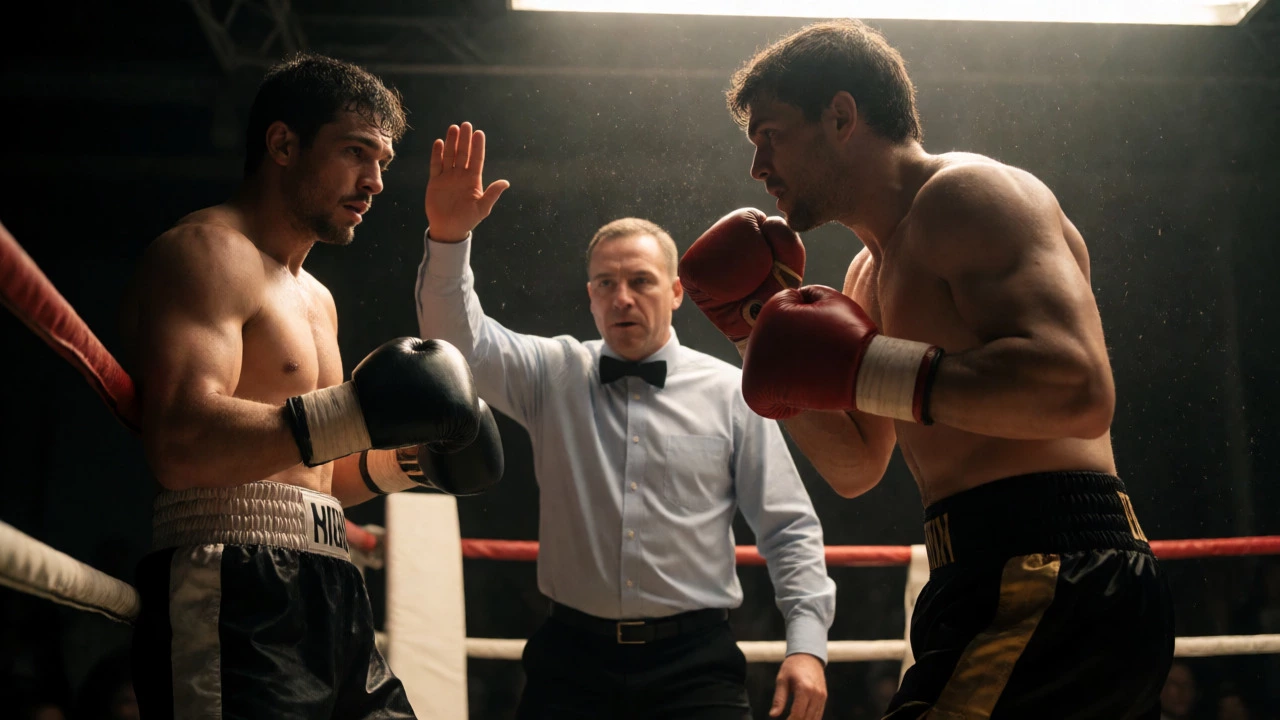
Then there’s the Technical Knockout (TKO), which is a stoppage where the referee, doctor, or corner decides the fighter cannot safely continue, even if they haven’t been knocked down. Think of it as a mercy rule. Maybe a fighter is getting pummeled against the ropes. They’re still standing, but they aren’t defending themselves. The ref steps in and calls it. That’s a TKO. It’s less cinematic than a KO, but often more common.
Finally, we have the Decision, which is a victory awarded based on points scored by judges after all scheduled rounds are completed. If nobody gets knocked out, the judges tally up who landed the cleaner, harder punches. This is where things get subjective-and controversial.
Breaking Down the Stoppages: KO vs. TKO vs. DQ
People often mix up KOs and TKOs, but the distinction matters. In a KO, the fighter is unconscious or too dazed to beat the count. In a TKO, the fighter might be fully awake but helpless. Imagine a boxer trapped in a corner, taking heavy shots without blocking. Their eyes are open, but they aren’t fighting back. The referee sees this and stops the bout to prevent injury. That’s a TKO.
There’s also the Disqualification (DQ), which is a rare victory granted to the opponent when a fighter commits a severe foul, such as hitting below the belt intentionally or refusing to obey the referee. You won’t see this often. Most fouls result in point deductions. But if a headbutt causes a cut that stops the fight, and the judge deems it intentional, the offender loses by DQ.
| Outcome Type | Definition | Who Stops It? | Rarity |
|---|---|---|---|
| Knockout (KO) | Fighter down for 10-second count | Referee (via count) | Common |
| Technical Knockout (TKO) | Fighter unable to defend effectively | Referee, Doctor, or Corner | Very Common |
| Disqualification (DQ) | Severe rule violation | Referee | Rare |
| Retirement (RTD) | Fighter quits between rounds | Corner/Fighter | Uncommon |
The Judge’s Scorecard: Unanimous, Split, and Majority
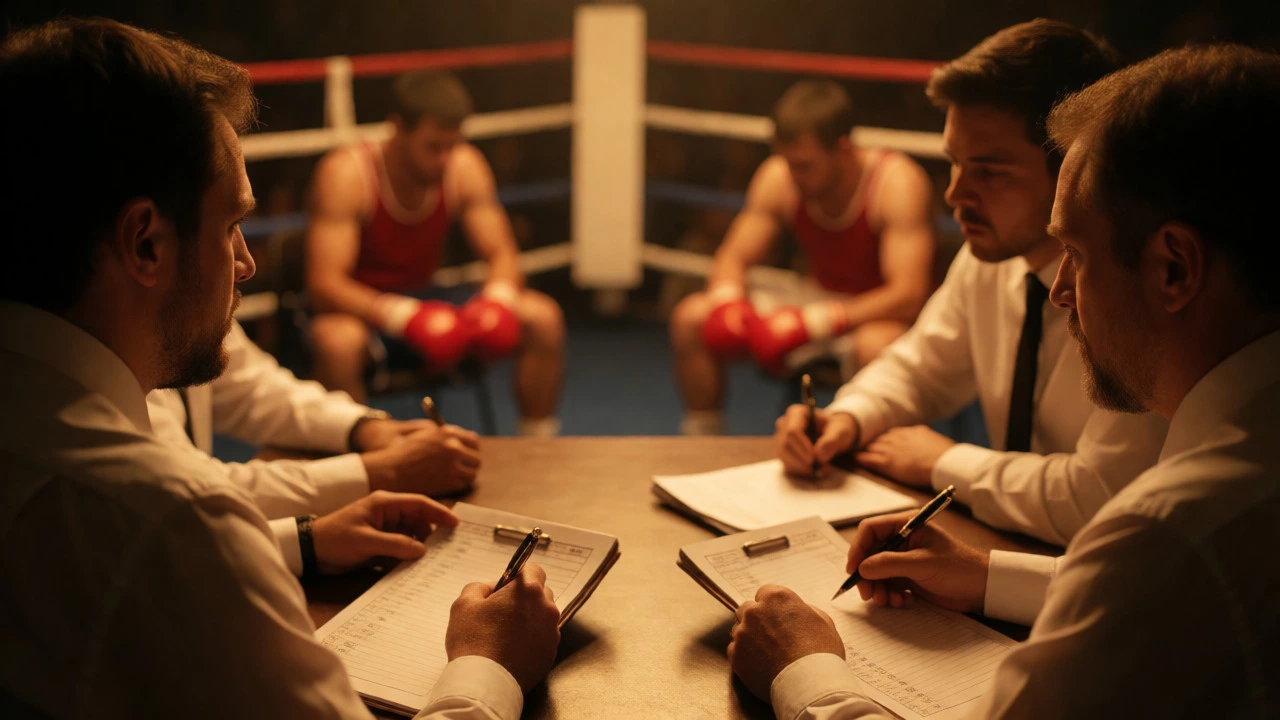
When the bell rings for the final round, the real tension begins. The fighters go to their corners, and the judges submit their scorecards. But not all decisions are created equal. Understanding these terms helps you grasp why some fights feel "robbed" while others seem obvious.
A Unanimous Decision (UD) is a victory where all three judges score the fight for the same winner. This is the cleanest way to win by decision. No arguments. Everyone agrees Fighter A was better.
A Split Decision (SD) occurs when two judges favor one fighter while the third favors the other. This is the source of most post-fight anger. One judge saw it differently. Why? Maybe they valued volume over power, or maybe they had a bad seat. Either way, it leaves room for debate.
Then there’s the Majority Decision (MD). This happens when two judges score the fight for one winner, and the third scores it a draw. It’s like a split decision, but with a neutral vote. It’s rarer than SDs but equally frustrating for fans who want a clear consensus.
Draws and No Contests: When Nobody Wins
Sometimes, the answer to "what is a boxing victory called?" is: it isn’t. A fight can end without a winner.
A Draw is an outcome where the judges’ scorecards do not produce a single winner. Like decisions, draws come in flavors. A Unanimous Draw means all three judges saw it as a tie. A Split Draw means one judge favored Fighter A, one favored Fighter B, and one called it a tie. A Majority Draw means two judges called it a tie, and one picked a winner.
But what if the fight doesn’t even start properly? Enter the No Contest (NC). This is a ruling where the result is annulled due to accidental fouls, injuries, or external factors preventing a fair completion. For example, if an accidental head clash opens a severe cut in Round 1, and the doctor stops the fight because continuing would risk permanent damage, the result is often a No Contest. It’s not a loss; it’s as if the fight never happened. Both records remain untouched regarding wins or losses.
Why Does It Matter? The Business of Boxing
You might wonder, "Does it really matter if it’s a UD or an SD?" Absolutely. In the world of professional boxing, perception drives paydays.
Consider the career of a heavyweight champion. If they win their title defense by a controversial Split Decision, critics will call them lucky. Promoters worry about rematch demand. Fans lose trust. Conversely, a crisp Technical Knockout sends a message: "I am dominant." This affects future contract negotiations, sponsorships, and legacy status.
Take the case of Manny Pacquiao vs. Timothy Bradley I. Many fans believed Pacquiao won, but the judges gave it to Bradley via Split Decision. The controversy lingered for years. Had it been a clear Unanimous Decision, the narrative would have been different. The type of victory shapes history.
Moreover, betting odds shift based on recent performance types. A fighter with a string of early-round TKOs is seen as dangerous and exciting. A fighter winning close Split Decisions is viewed as vulnerable. Bookmakers and promoters watch these patterns closely.
Quick Reference: Identifying the Outcome
Next time you watch a fight, use this simple checklist to identify the result instantly:
- Did the fighter fall and fail to stand up by the count of ten? That’s a Knockout (KO).
- Was the fighter still standing but stopped by the ref/doctor/corner? That’s a Technical Knockout (TKO).
- Did the fighter quit between rounds? That’s a Retirement (RTD).
- Did the fight go the distance? Check the judges' cards.
- All 3 judges agree? Unanimous Decision (UD).
- 2 judges agree, 1 disagrees? Split Decision (SD).
- 2 judges agree, 1 calls a draw? Majority Decision (MD).
- All 3 judges disagree/tie? Draw.
- Was the fight stopped due to an accidental injury/foul? Likely a No Contest (NC).
Common Misconceptions About Boxing Victories
One big myth is that a TKO is "lesser" than a KO. Not true. A TKO often shows superior conditioning and tactical dominance. Mike Tyson didn’t just knock people out; he broke their spirit so thoroughly that referees stepped in. That’s elite skill.
Another misconception is that judges always count punches. Modern scoring emphasizes effective aggression, ring generalship, and defensive skills-not just volume. Landing 50 light jabs might lose to 10 hard hooks that visibly hurt the opponent. Understanding this nuance explains many "upset" decisions.
Finally, remember that amateur boxing differs slightly. Amateur bouts rarely end in KOs because protective gear absorbs impact. Most amateur victories are decided by points, making the concept of a "decision" far more central to the Olympic-style experience.
What is the difference between a KO and a TKO?
A Knockout (KO) occurs when a fighter is knocked down and fails to rise before the referee counts to ten. A Technical Knockout (TKO) happens when the referee, doctor, or corner stops the fight because the fighter cannot safely continue, even if they haven't been knocked down.
Can a boxer win without knocking out the opponent?
Yes. If the fight goes the full number of scheduled rounds, the winner is determined by judges' scorecards. This results in a Unanimous, Split, or Majority Decision.
What does 'No Contest' mean in boxing?
A No Contest means the fight result is nullified, usually due to accidental fouls or injuries that prevent the match from continuing fairly. Neither fighter receives a win or a loss on their record.
Is a Technical Knockout worse than a Knockout?
No, neither is "worse." A TKO indicates the fighter was overwhelmed or injured to the point where continuing was unsafe. A KO indicates total physical defeat via unconsciousness or inability to stand. Both are decisive victories.
How do judges decide a Split Decision?
In a Split Decision, two judges score the fight for one boxer, while the third judge scores it for the opponent. This usually happens when the fight is very close, and judges interpret criteria like aggression or effectiveness differently.