
Boxing Scorecard Simulator
Enter scores for each round below. Remember: The winner of the round gets 10 points. The loser gets 9 or fewer. If it's even, both get 10.
Official Result
Red Corner
0
Total PointsBlue Corner
0
Total PointsJudge Breakdown
| Judge | Red Score | Blue Score | Winner |
|---|
You’ve watched the fight. The bell rings, the fighters embrace, and then... confusion. Who won? Was it the guy who landed more punches? Or was it the one who looked stronger in the last round? If you’ve ever scratched your head at a boxing match result, you’re not alone. The sport is subjective, nuanced, and often controversial. But once you understand the mechanics of how victory is actually awarded, the chaos makes sense.
At its core, a boxing match can be won in three primary ways: by knockout (KO), by technical knockout (TKO), or by decision (which includes unanimous, split, and majority decisions). There are also rarer outcomes like disqualifications or draws. Each path to victory has specific rules, criteria, and implications for the fighter’s career. Let’s break down exactly what happens inside the ring and behind the scenes when the scorecards come out.
The Immediate End: Knockouts and Technical Knockouts
The most definitive way to win is when the opponent can no longer continue. This stops the debate before it starts. A Knockout (KO) occurs when a fighter is knocked down by a legal punch and fails to rise before the referee counts to ten. It’s binary: either you get up, or you don’t. No judges involved, no scorecards to tally. Just raw physical dominance.
A Technical Knockout (TKO) is slightly more complex but equally final. Here, the referee steps in to stop the fight because they believe the fighter cannot defend themselves intelligently, even if they aren’t technically "knocked down" in the traditional sense. Maybe they’re taking too much punishment, maybe they’re dizzy, or maybe their corner throws in the towel. The key difference? In a KO, the count decides; in a TKO, the referee’s judgment protects the fighter from unnecessary damage.
Why does this distinction matter? For betting odds and historical records, a KO/TKO signals power and finishing ability. A decision suggests stamina and tactical skill. Promoters love KOs because they sell tickets. Fighters chase them for legacy.
The Judges’ Scorecards: How Points Are Awarded
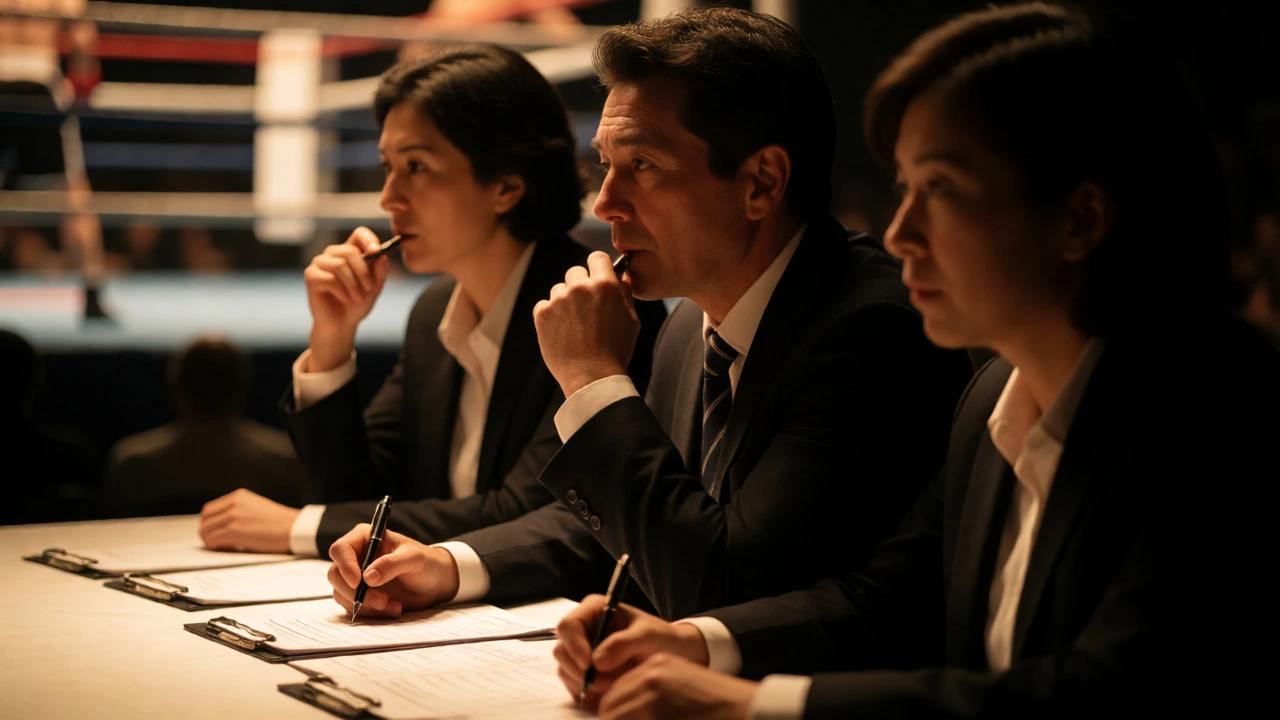
If the fight goes the distance, victory falls into the hands of three judges sitting ringside. They do not see the crowd’s reaction. They do not care about who threw the harder punch visually. They follow strict criteria defined by major sanctioning bodies like the WBC, WBA, IBF, and WBO.
Most professional bouts use the 10-Point Must System. This means the winner of each round gets 10 points, and the loser gets 9 or fewer. If a round is even, both get 10. Simple math, right? Not quite. The complexity lies in what constitutes a winning round.
Judges prioritize four main factors, usually in this order of importance:
- Clean Punching: Did the punch land with force on the front or side of the head/body? Blocking a punch doesn’t count. Glancing blows rarely score.
- Effective Aggression: Moving forward isn’t enough. You must move forward and land punches. Walking into a counter-puncher’s range without landing anything scores nothing.
- Ring Generalship: Who controlled the pace? Who forced the opponent to fight their style? This is subjective and often where controversies begin.
- Defense: Slipping punches and blocking attacks show skill, but defense alone doesn’t win rounds unless you’re avoiding significant damage while failing to offense.
Here’s the trap many casual fans fall into: volume. Landing 50 light jabs might lose to 10 heavy, clean counters. Why? Because effective aggression and clean punching outweigh sheer quantity. A fighter who backs off after every exchange often loses the round despite throwing more punches.
Decoding the Decision Types
When the final bell rings, the judges submit their scorecards. These are read aloud by an announcer. Depending on how the three judges agree, you get different types of decisions. Understanding these helps you interpret why some fights feel "stolen" while others feel fair.
| Decision Type | Judge Agreement | Typical Scenario |
|---|---|---|
| Unanimous Decision (UD) | All 3 judges score for Fighter A | Fighter A dominated clearly across all rounds. |
| Split Decision (SD) | 2 judges for Fighter A, 1 for Fighter B | A close fight where one judge saw Fighter B winning key rounds. |
| Majority Draw (MD) | 2 judges draw, 1 for Fighter A | Two judges thought it was even; one gave it to Fighter A. |
| Majority Decision (MajD) | 2 judges for Fighter A, 1 draw | Two judges favored Fighter A; one saw an even fight. |
| Draw (D) | All 3 judges score a tie | Rare. Both fighters performed equally well over 12 rounds. |
Split decisions are the most common source of outrage. Imagine a 12-round title fight. One judge sees Fighter A winning 6 rounds, Fighter B winning 5, and 1 even. Another judge sees Fighter B winning 6, Fighter A 5, and 1 even. The third judge breaks the tie. Suddenly, one bad view of Round 7 changes history.
Subjectivity and Bias: The Human Element
Boxing scoring is inherently subjective. Unlike tennis, where the ball is in or out, boxing relies on human interpretation of impact and intent. Two experts can watch the same round and disagree. That’s normal. But bias exists.
Home advantage is real. In Melbourne, a local hero fighting an international challenger might get the benefit of the doubt in close rounds. Why? Judges are human. They hear the crowd. They see the local fanbase cheering louder. Studies suggest home fighters receive roughly 0.5 to 1 point advantages per fight in contested decisions. It’s not conspiracy-it’s psychology.
Style bias also plays a role. Out-boxers (fighters who stay at range) often struggle against pressure fighters (who swarm inside) because judges sometimes misinterpret movement as evasion rather than strategy. Conversely, aggressive brawlers who miss often can still win rounds if they look intimidating, even if they land fewer clean shots.
Disqualifications and No Contests
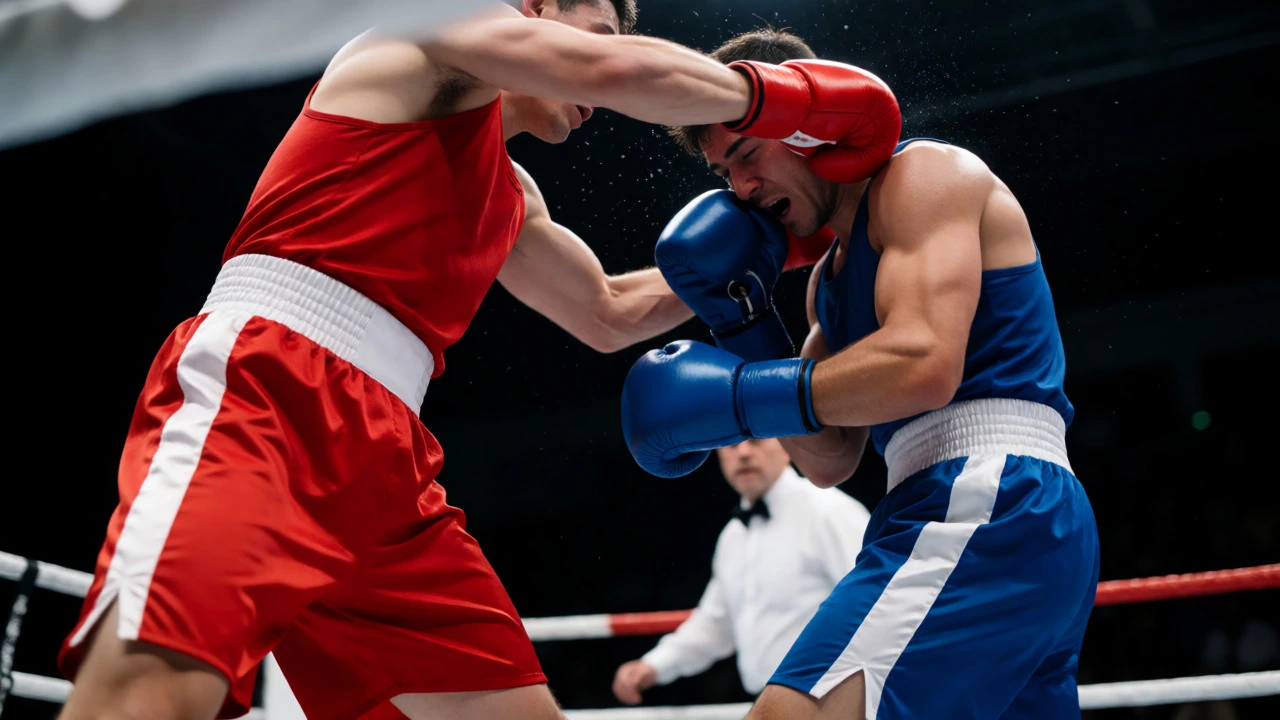
Sometimes, a fight ends without a clear winner based on skill. If a fighter commits repeated fouls-like hitting below the belt, holding excessively, or using headbutts-the referee may issue warnings, deduct points, or eventually disqualify them. A Disqualification (DQ) loss looks terrible on a record, suggesting poor discipline.
A No Contest (NC) happens if an accidental foul (like a head clash causing a cut) prevents the fight from continuing early on, typically before a certain number of rounds (often 4 or 5, depending on jurisdiction). The result is erased. Neither fighter wins or loses. It’s frustrating for fans who paid to see a resolution, but it protects fighters from being penalized for accidents.
Practical Tips for Watching Future Fights
Want to predict winners better? Stop watching just the punches. Watch the feet. See who controls the center of the ring. Notice who initiates exchanges versus who reacts. Keep your own scorecard mentally. Ask yourself: Who did more damage? Who had the better plan?
Remember that judges score round-by-round. Losing the first three rounds doesn’t mean you’ve lost the fight. Comeback victories happen when a fighter adjusts their strategy mid-bout. If you’re new to boxing, start by following a single fighter’s journey. Learn their tendencies. Then, when they face someone else, you’ll spot the stylistic clashes that decide close fights.
What is the 10-point must system?
The 10-point must system is the standard method for scoring professional boxing matches. After each round, judges award 10 points to the winner of the round and 9 or fewer to the loser. If a round is scored evenly, both fighters receive 10 points. Deductions occur for knockdowns or fouls, altering the baseline scores.
Can a boxer win if they throw fewer punches?
Yes, absolutely. Boxing scoring prioritizes effective aggression, clean punching, and ring generalship over total punch volume. A fighter who lands fewer but heavier, cleaner punches that visibly affect their opponent will often win rounds against a fighter who throws many light, ineffective jabs.
What is the difference between a KO and a TKO?
A Knockout (KO) occurs when a fighter is knocked down and fails to stand up within a 10-second count. A Technical Knockout (TKO) happens when the referee stops the fight because a fighter cannot defend themselves effectively, even if they haven't been counted out. TKOs can also occur if a corner throws in the towel to protect their fighter.
Why do some fights end in a draw?
A draw occurs when the judges' scorecards result in a tie. This can be a Unanimous Draw (all three judges score it even), a Majority Draw (two judges score it even, one favors a fighter), or a Split Draw (one judge favors each fighter, one scores it even). Draws are rare but happen in closely contested bouts where neither fighter dominates significantly.
Do judges count blocked punches?
Generally, no. Blocked punches do not count toward a fighter's score. Only clean punches that land on the target areas (front and sides of the head and torso) with sufficient force are considered effective. Defense is judged separately under the criterion of defensive skill, but simply absorbing hits without countering rarely earns points.