Marathon Performance Analyzer & Pace Guide
Avg Pace (km)
Avg Pace (mi)
Benchmark Status
Enter your details on the left to see how your time compares to peers, get your exact pace, and receive tailored training advice.
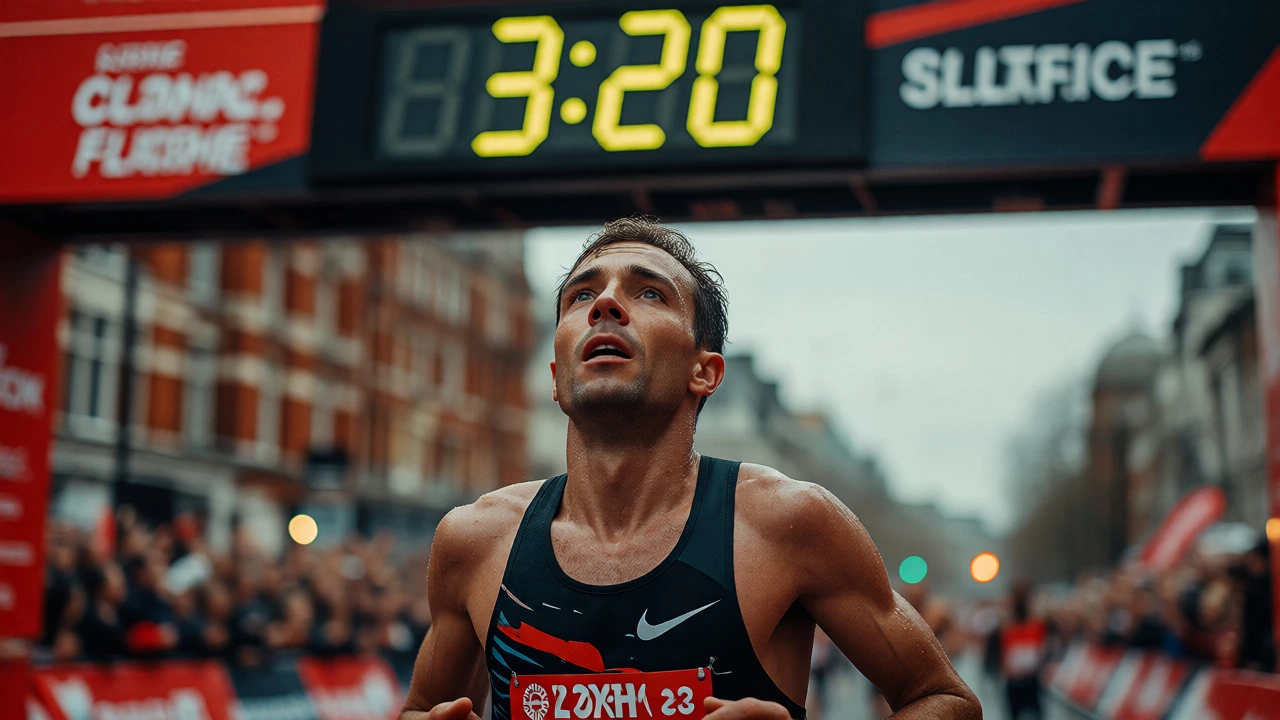
You cross the finish line, gasping for air, legs feeling like lead pipes. You look up at the clock. It reads 3 hours and 20 minutes. Is that good? For most people, it’s not just good-it’s impressive. But "good" is relative in the running world. A 3:20 puts you in a specific tier of runners, one that commands respect but also opens doors to faster goals. Whether you’re chasing a Boston Qualifier or just trying to beat your mate on Strava, understanding where this time sits in the grand scheme of marathon performance changes how you train.
The Reality Check: Where Does 3:20 Sit?
Let’s cut through the noise. In the global context of recreational marathon running, a sub-3:30 marathon is widely considered a significant milestone. Data from major race organizers and platforms like RunRepeat suggests that the average finishing time for all runners across major world marathons hovers around 4:30 to 4:50. So, if you hit 3:20, you are already faster than roughly 70-80% of the field. That’s not a participation trophy; that’s a solid athletic achievement.
However, context matters. If you’re a 25-year-old male with a background in college track, 3:20 might feel underwhelming compared to a 2:50 personal best. If you’re a 45-year-old female returning from injury, 3:20 could be a career-defining moment. The general rule of thumb used by coaches is that breaking the 3:30 barrier moves you from "serious hobbyist" to "competitive age-group runner." You’re no longer just finishing; you’re racing.
Pace Breakdown: What 3:20 Actually Feels Like
To hold a 3:20 finish, you need consistency. Math doesn’t lie, and neither does your watch. Here is the breakdown of what you need to sustain for 42.2 kilometers (26.2 miles):
- Average Pace: 4:45 per kilometer (7:38 per mile).
- Total Distance: 42.195 km.
- Hourly Split: Approximately 12.6 km (7.8 miles) per hour.
Holding 4:45/km feels manageable when you’re fresh at kilometer 5. It feels comfortable at kilometer 20. By kilometer 35, when your glycogen stores are tapped and your form starts to crumble, that same pace feels like sprinting uphill. This is why negative splitting-running the second half slightly faster than the first-is so hard at this speed. Most runners who aim for 3:20 end up fading because they started too fast, hoping to bank time.
Age and Gender Adjustments
Your age and gender significantly alter whether 3:20 is "elite" or "average." Running performance peaks differently for men and women due to physiological differences such as VO2 max capacity and muscle mass distribution. Below is a realistic benchmark table based on data from World Athletics and major marathon results.
| Age Group | Men's Ranking Status | Women's Ranking Status | Notes |
|---|---|---|---|
| 18-29 | Competitive Amateur | Very Fast / Elite Local | For women, this is near BQ territory in many regions. |
| 30-39 | Strong Club Runner | Elite Amateur | Often qualifies for national championships in smaller countries. |
| 40-49 | Top Tier Master | Highly Competitive | Likely podium contender in local age groups. |
| 50+ | Exceptional | World Class Potential | At this age, 3:20 is rare and often leads to international selection. |
Notice how the value of that time shifts. For a 20-year-old guy, 3:20 means he has work to do to get to 3:00. For a 55-year-old woman, 3:20 might mean she’s heading to the World Masters Championships. Always compare yourself to peers in your demographic, not just the overall winner.

Boston Qualifiers and Prestige
In the US-centric running culture, the Boston Marathon serves as the ultimate benchmark for serious amateurs. Qualifying times change every few years, but historically, a 3:20 has been right on the edge for certain age groups. For example, in recent cycles, men aged 45-49 needed to run around 3:15-3:20 to qualify, while women in the same bracket needed closer to 3:45-3:50.
If you are a man over 40, hitting 3:20 puts you in the conversation for Boston. For younger men, it’s a stepping stone. For women of almost any age group, 3:20 is comfortably inside the qualifying window, making it a highly prestigious time. Even if you aren’t chasing Boston, hitting 3:20 earns you entry into exclusive running clubs and invites to invitation-only races like New York City Marathon, which often use past performance as a filter.
How to Achieve a 3:20 Marathon
You don’t stumble into a 3:20. It requires structured training. If you’re currently running 3:40, jumping straight to 3:20 training can lead to burnout. Here is the typical progression required to lock in this pace.
1. Build the Base
You need volume. Most successful sub-3:30 runners log between 60-80 km (40-50 miles) per week during peak training blocks. Without this aerobic base, your body cannot efficiently clear lactate at 4:45/km. If you’re only running 40 km a week, focus on increasing distance slowly before worrying about speed.
2. Tempo Runs Are Non-Negotiable
Tempo runs teach your body to sustain effort just below your anaerobic threshold. To run 3:20, your tempo pace should be around 4:15-4:20/km. Doing 8-10 km at this pace weekly builds the mental and physical resilience needed for the final 10k of a marathon.
3. Long Runs with Purpose
Don’t just jog your long runs. Incorporate marathon pace segments. Try a 30 km run where the last 10 km are done at your target 4:45/km pace. This simulates the fatigue of the late race stages and trains your legs to fire efficiently when tired.
4. Strength Training
Many runners skip gym work, but at this level, it’s crucial. Strong glutes and core stability prevent form breakdown in the last 5 km. Squats, lunges, and deadlifts once a week can save you 5-10 minutes by keeping your stride efficient when you’re exhausted.

Common Mistakes That Ruin Sub-3:30 Attempts
So many runners miss their 3:20 goal by seconds. Why? Usually, it’s strategy errors, not fitness issues.
- Starting Too Fast: Adrenaline makes the first 5 km feel easy. If you run 4:30/km early, you’ll pay for it later. Stick to the plan.
- Neglecting Fueling: At 3:20 intensity, you burn glycogen rapidly. You need 30-60 grams of carbs per hour. If you forget gels or chews, you will bonk at km 32.
- Overtraining Before the Race: Tapering is an art. Cutting volume too little leaves you fatigued; cutting too much makes you stale. Aim for a 3-week taper reducing mileage by 30%, then 50%, then 70%.
What Comes After 3:20?
Once you break 3:20, the next logical targets are 3:10 and then 3:00. The jump from 3:20 to 3:00 is harder than 3:40 to 3:20. It requires more precision, better recovery, and often coaching. But having 3:20 in your pocket proves you have the engine. Now you just need to tune it.
Remember, running is a journey. A 3:20 marathon is a fantastic achievement that reflects discipline, pain tolerance, and smart training. Celebrate it. Then, decide if you want to chase the next number.
Is a 3:20 marathon good for a beginner?
No, a 3:20 marathon is generally not considered a beginner time. Beginners typically finish between 4:30 and 5:30. A 3:20 indicates several years of consistent training and high aerobic fitness, placing the runner in the advanced amateur category.
What is the required pace for a 3:20 marathon?
To achieve a 3:20 marathon, you must maintain an average pace of approximately 4:45 per kilometer or 7:38 per mile throughout the entire 42.2km distance.
Does a 3:20 marathon qualify for Boston?
It depends on your age and gender. For men aged 45-49 and older, 3:20 is often close to or within the qualifying standard. For women, 3:20 is comfortably under the qualifying time for most age groups. Check the current year's standards on the official Boston Athletic Association website.
How much faster do I need to run to get to 3:00?
To drop from 3:20 to 3:00, you need to improve your average pace by about 28 seconds per kilometer (or 45 seconds per mile). This represents a significant physiological improvement requiring increased training volume and higher-intensity interval sessions.
Is 3:20 a good time for a 50-year-old?
Yes, a 3:20 marathon is an exceptional time for a 50-year-old. It places you in the top percentile of your age group and likely qualifies you for podium positions in local masters competitions.