
Boxing Foul Referee Challenge
Put yourself in the referee's shoes. Review each scenario, identify the foul (if any), and determine the correct penalty based on professional boxing standards.
Loading scenario...
Quiz Complete!
You scored:
0/5
You are watching a heavyweight title fight. The crowd is on its feet. One fighter throws a wild hook that lands squarely behind the other’s ear. The opponent crumples to the canvas, not from the impact of a clean strike, but because his equilibrium just shattered. The referee waves off the action immediately. No knockdown counted. Just a warning, or worse, a point deduction. Why? Because that was an illegal punch in boxing, specifically known as a rabbit punch, which targets the base of the skull and can cause severe neurological damage.
Boxing looks like controlled violence, but it is actually a sport governed by strict geometry and anatomy. You cannot hit anywhere you want. If you do, you risk disqualification, point deductions, or sending your opponent to the hospital. Whether you are a new fan trying to understand why a ref stopped the bout, or a novice boxer learning to spar without getting kicked out of the gym, knowing what constitutes an illegal strike is fundamental.
Quick Summary: Key Takeaways
- The Belt Line Rule: Hits below the navel (the belt line) are illegal low blows.
- The Back of the Head: Striking the back of the head, especially the brainstem area (rabbit punch), is strictly prohibited.
- Elbows and Heads: Using your elbow or head to strike an opponent is a foul, even if it looks accidental.
- Holding: Grabbing an opponent to prevent them from punching is a technical foul that leads to warnings and point deductions.
- Referee Discretion: Intent matters less than effect; if a legal-looking punch causes excessive damage due to poor positioning, it might still be ruled a foul.
The Anatomy of Legal vs. Illegal Strikes
To understand what is illegal, you first need to visualize the target zone. In professional boxing, the scoring area is limited to the front and sides of the body above the waistline. This includes the head, the face, the chin, the jaw, and the torso from the belt up to the neck. Anything outside this box is fair game for a penalty.
Let's break down the specific types of illegal punches and strikes that referees watch for. It isn't just about the fist; it's about the angle, the location, and the part of the body used.
The Low Blow
This is the most common foul in amateur and professional bouts alike. A low blow is a punch that lands below the belt line, typically targeting the groin or lower abdomen. While hitting the abs is legal, dropping the hand too far results in a strike to the pelvic region. The immediate reaction is usually dramatic-fighters drop to their knees, clutching themselves. Referees give the injured fighter up to five minutes to recover. If they can't continue, the bout ends. If they can, the offender loses points.
Why is it so dangerous? Beyond the pain, a hard low blow can cause internal injury to the testicles or abdominal organs. It also disrupts breathing rhythm, making it a tactical weapon when a fighter is tired and needs a breather.
The Rabbit Punch
The term "rabbit punch" comes from hunting rabbits by striking them at the base of the skull to stun them instantly. In boxing, this refers to a punch landing on the back of the head or directly on the brainstem. This area houses the medulla oblongata, which controls vital functions like breathing and heart rate.
A clean hook or cross can easily drift into this zone if the defender turns their head away. It’s often accidental, but the consequences are severe. Repeated rabbit punches can lead to concussions or long-term cognitive issues. Referees are trained to spot these instantly. If a fighter keeps turning their head to protect the front, exposing the back, the ref will warn them. If the striker keeps hitting there, they get penalized.
Strikes to the Back
Similar to the rabbit punch, hitting the back of the head or the spine is illegal. Imagine two fighters clinching. As they separate, one throws a short uppercut that connects with the back of the opponent's head. That’s a foul. The rule exists to protect the spinal column and the sensitive nerves running along the back. Boxers must aim for the front or side. Hitting the back is considered unsafe and unsportsmanlike.
Fouls Beyond the Fist: Elbows, Heads, and Forearms
Not all illegal actions involve a closed fist. Sometimes, the weapon is the arm itself, or the head.
Leading with the Elbow
In close quarters, elbows can slip through the guard. An elbow strike occurs when a fighter uses the sharp tip of their elbow to cut an opponent’s brow or cheekbone. This is highly effective for causing cuts, which judges score heavily, but it is technically a foul. If a fighter intentionally drops their elbow into an opponent's face during a clinch, they lose a point. If it’s accidental, the referee issues a warning. However, repeated accidental elbows suggest poor technique or excessive roughness, leading to penalties.
Headbutts
A headbutt is exactly what it sounds like: using the forehead to strike an opponent. This usually happens in the clinch when fighters are grappling for position. If a fighter leans forward and crashes their forehead into their opponent's nose or eyebrow, it’s a foul. Headbutts are notorious for opening deep cuts over the eyes, blinding the victim with blood. Referees distinguish between intentional headbutts (immediate point deduction) and accidental ones (warning). But after two warnings, the third incident costs a point.
Forearm Blocks
Using the forearm to push an opponent's face is a gray area. Light contact is fine. But if a fighter uses their forearm to rake across the opponent's eyes or nose to create space, it’s a foul. This is often called "forearm checking." It’s annoying, painful, and illegal if done with force.
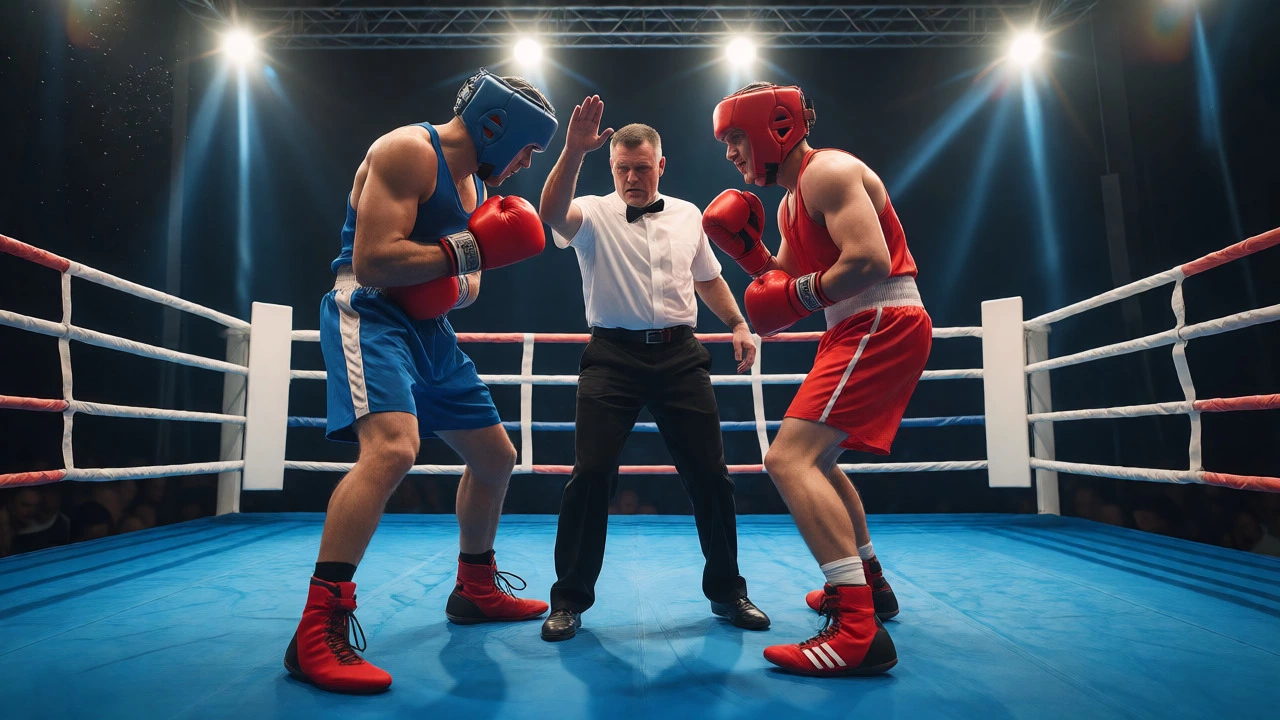
The Mechanics of Holding and Wrestling
Boxing is not wrestling. You cannot grab your opponent to stop them from punching. This is where many beginners get confused. There is a difference between a "clinch" and "holding."
A legal clinch involves tying up arms to neutralize an attack briefly while waiting for the referee to say "break." Holding is a foul where a fighter grabs their opponent’s body or arms to restrict movement, preventing them from throwing punches. If you wrap your arms around your opponent and refuse to let go, or if you use your hands to push their face away while keeping them trapped, you are holding.
Referees monitor this closely. They will shout "Break!" and physically separate the fighters. If a fighter continues to hold after the command, they receive a warning. Persistent holding leads to point deductions. It kills the flow of the fight and is seen as defensive cowardice.
| Foul Type | Description | Immediate Penalty | Repeat Offense |
|---|---|---|---|
| Low Blow | Punch below the belt line | 5-minute recovery time | Point deduction |
| Rabbit Punch | Strike to the back of the head/brainstem | Warning | Point deduction or DQ |
| Holding | Grabbing opponent to prevent punching | Verbal warning | Point deduction |
| Headbutt | Striking with the forehead | Warning (if accidental) | Point deduction |
| Elbow Strike | Using elbow to cut or strike | Warning | Point deduction |
Penalties: From Warnings to Disqualifications
So, what happens when you throw an illegal punch? The system is progressive. It doesn’t start with a red card like soccer. It starts with education.
1. The Verbal Warning: For minor or clearly accidental fouls, the referee simply tells the fighter to adjust. "Keep your hands up," or "Don't hit him there." This is a free pass. Use it wisely.
2. The Official Warning: If the foul repeats, or if the referee deems it intentional, they raise a finger to signal a warning to the judges. This appears on the scorecard. It signals to the audience and the fighter that patience has run out.
3. Point Deduction: After warnings, the next offense costs a point. This is devastating in a close fight. Judges subtract one point from the offending fighter's score for that round. Two point deductions mean you are effectively losing the round before the bell rings.
4. Disqualification (DQ): If a fighter repeatedly commits fouls, or if an intentional foul causes an injury that stops the fight, they are disqualified. The result goes to the opponent. Even if the fouling fighter is winning on the scorecards, a DQ means they lose.
Tactical Implications: How Fighters Exploit Foul Zones
Savvy boxers know the rules well enough to bend them. They don’t always throw blatant fouls, but they operate in the gray areas.
Consider the "shoulder roll." Some fighters dip their shoulder aggressively into an opponent's chest. If done lightly, it’s balance. If driven hard, it’s a shove that counts as holding or pushing. Referees struggle to call this consistently.
Another tactic is "dirty boxing." Inside the pocket, fighters use small, subtle moves. A slight pull on the opponent's neck while throwing a knee-high punch (which is illegal in some jurisdictions but allowed in others depending on the commission) can confuse judges. In standard pro boxing, pulling the head down to land an uppercut is legal, but pulling the head down *and* holding the neck is a foul.
Understanding these nuances helps you appreciate the refereeing. When a ref steps in quickly, they aren't interrupting the action; they are protecting the athletes. A rabbit punch delivered in heat of battle can end a career. A low blow can end a night. The rules exist to keep the sport sustainable.

Regional Variations: Are Rules Universal?
Most major commissions-the Association of Boxing Commissions (ABC), the World Boxing Council (WBC), the IBF-follow similar guidelines. However, local variations exist.
In some amateur competitions, the definition of the "belt line" is stricter. In certain regional circuits, headbutts are treated more harshly due to historical precedent. Always check the specific ruleset for the event you are attending or betting on. But generally, if it hits the back of the head or below the belt, it’s illegal everywhere.
Frequently Asked Questions
Is a punch to the back of the head always a foul?
Yes, striking the back of the head is a foul. Specifically, hits to the brainstem area (rabbit punch) are considered the most dangerous. Hits to the back of the skull are also illegal. Referees issue warnings for accidental hits, but repeated offenses result in point deductions.
What happens if a fighter gets hurt by an illegal low blow?
The referee stops the action and gives the injured fighter up to five minutes to recover. If they can continue, the fight resumes, and the offender may receive a warning or point deduction. If the fighter cannot continue, the bout ends. If the foul was intentional, the offender is disqualified. If accidental, the result depends on the scorecards at the time of stoppage.
Can you use your elbow in boxing?
No, you cannot use your elbow to strike. Leading with the elbow is a foul. However, light contact with the elbow during a clinch or natural movement is often tolerated unless it causes a cut or is deemed intentional. Intentional elbow strikes result in warnings and point deductions.
Is holding an opponent a foul in boxing?
Yes, holding is a foul. You cannot grab your opponent to prevent them from punching. Brief clinching is allowed to neutralize attacks, but actively wrapping arms around the opponent and refusing to break upon command results in warnings and eventually point deductions.
Why are rabbit punches so dangerous?
Rabbit punches strike the brainstem, which controls vital life functions like breathing and heart rate. Impact here can cause instant unconsciousness, severe concussions, or long-term neurological damage. Because the skull is thinner and less protected at the base, the risk of catastrophic injury is higher than with frontal blows.
Next Steps: Watching and Fighting Smart
If you are a spectator, next time you watch a fight, pay attention to the referee's hand signals. A raised index finger means a warning. A raised open palm means a point deduction. Understanding these cues transforms a chaotic brawl into a strategic chess match.
If you are a boxer, focus on your angles. Keep your chin tucked, but not so far back that you expose your ears. Aim for the front of the mask. Practice breaking cleanly from clinches rather than shoving or grabbing. Respect the boundaries of the ring, both literal and anatomical. Boxing rewards precision, not just power. And precision means hitting only where you are allowed to hit.